
The Realtor's Yard Sign Strategy Guide
Most realtors treat yard signs as a formality. Order one sign per listing, stake it at the curb, and move on. That approach leaves a lot of exposure on the table. A well-run sign strategy turns every active listing into a lead-generating asset for your next five listings. A well-known sign system also builds name recognition faster than almost any other local marketing channel.
This guide covers what signs to use at each stage of a listing, how to build a sign system across your book of business, and how sign placement and timing decisions actually influence buyer behavior.
For sizing and design specifics, see the real estate sign size guide and real estate yard sign design guide.
The Four-Stage Sign System Every Listing Needs
Yard signs work hardest when they match the information a buyer needs at each stage of the listing lifecycle. Using a single generic for-sale sign throughout the entire listing period misses three separate buyer touchpoints.
Stage 1: Coming Soon
A Coming Soon real estate sign goes up before the listing is active. It targets the most motivated buyer segment that exists: people who are already driving the neighborhood, watching the market, and ready to act before a listing goes live. These buyers often reach out directly through the sign rather than waiting for the MLS alert.
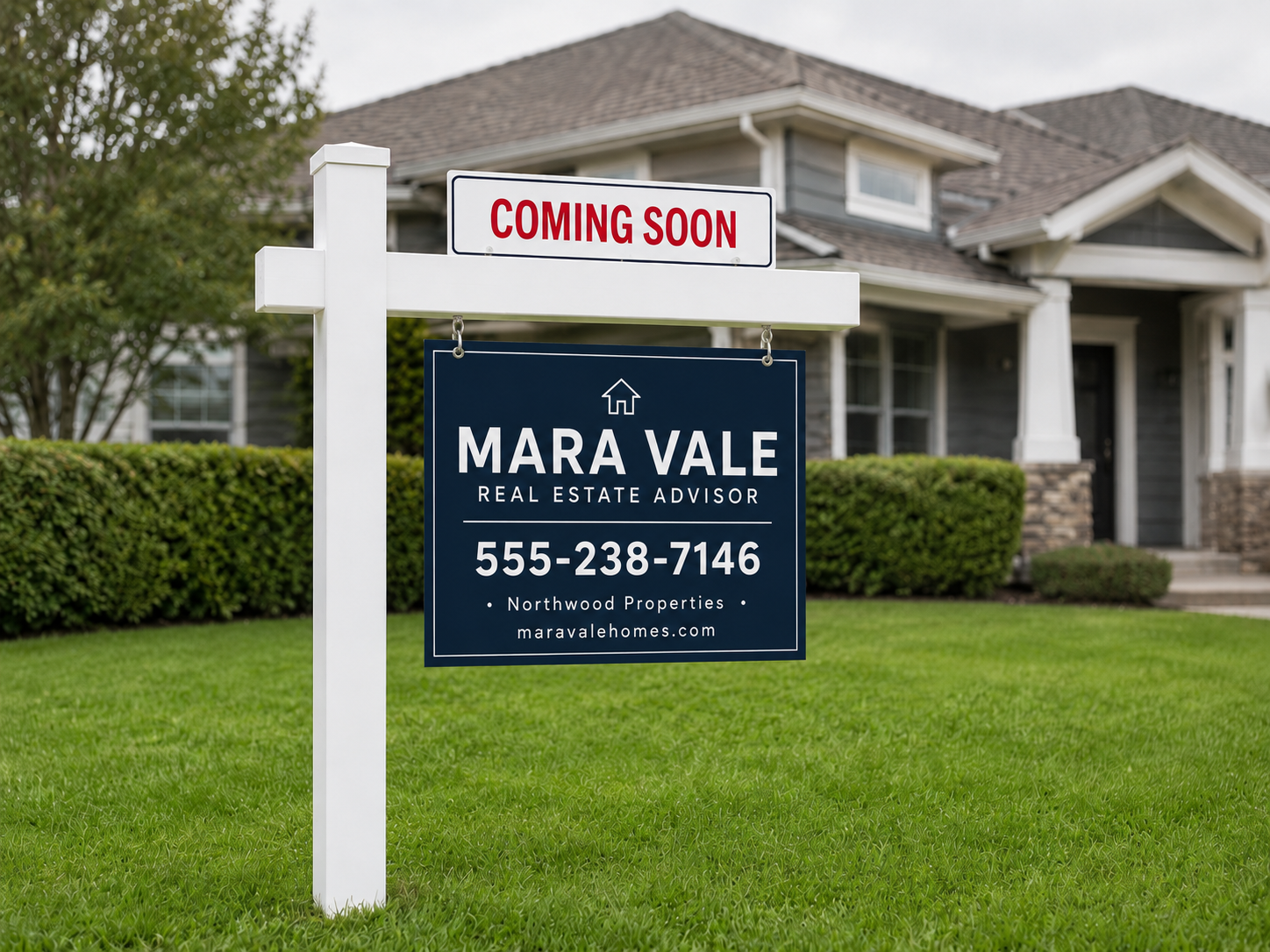
Coming Soon signs should include your name, brokerage, and a direct contact number. A QR code linking to a landing page or your contact form adds a trackable lead capture element without crowding the sign. Keep the message short. "Coming Soon" as the headline is enough. Everything else is noise.
Stage 2: Active Listing
The main For Sale sign is the anchor of the system. It goes up at listing launch and stays until the property closes. The design here needs to do two jobs simultaneously: attract the right buyer for this specific property and reinforce your name in the neighborhood for the next listing.
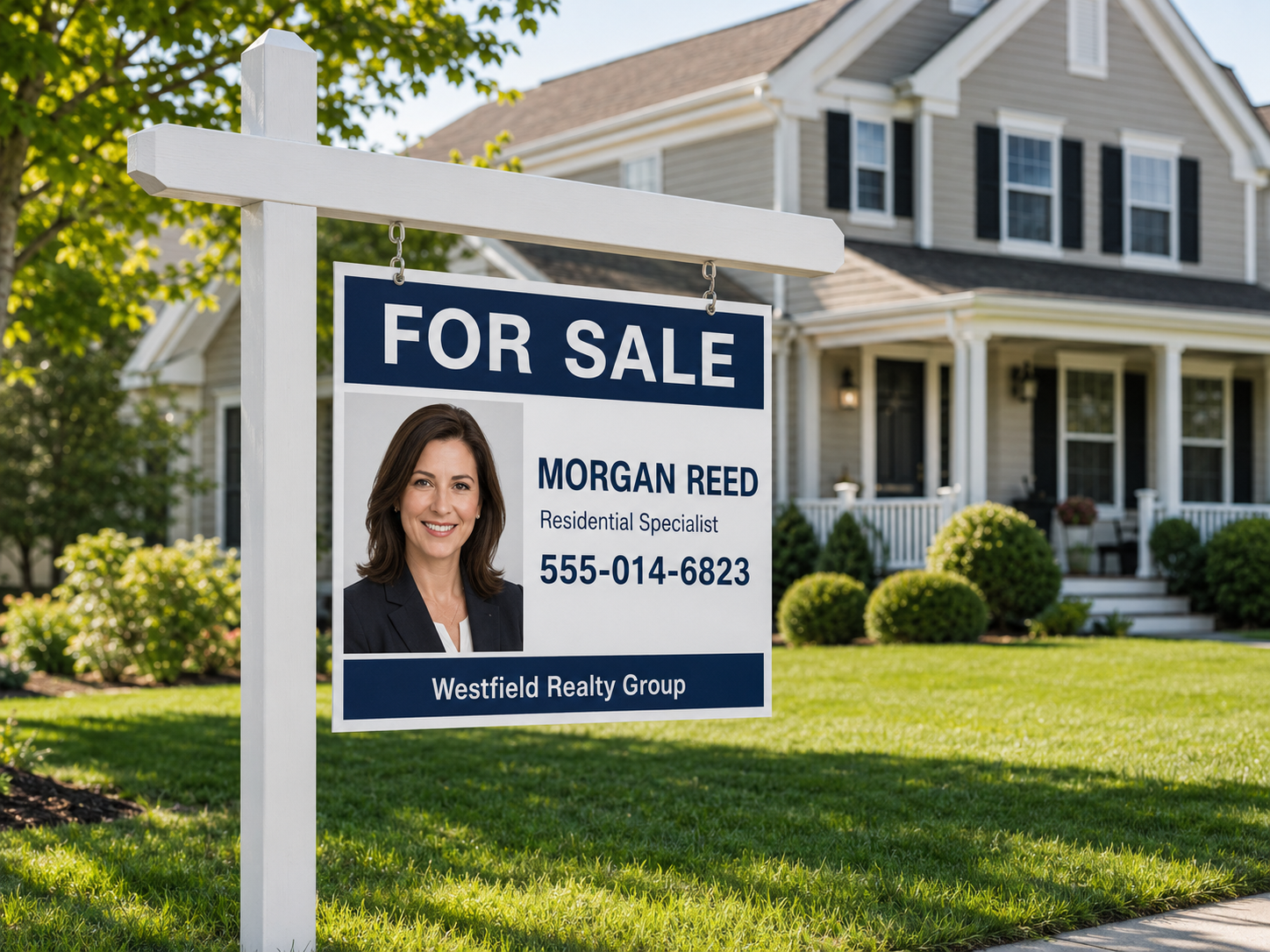
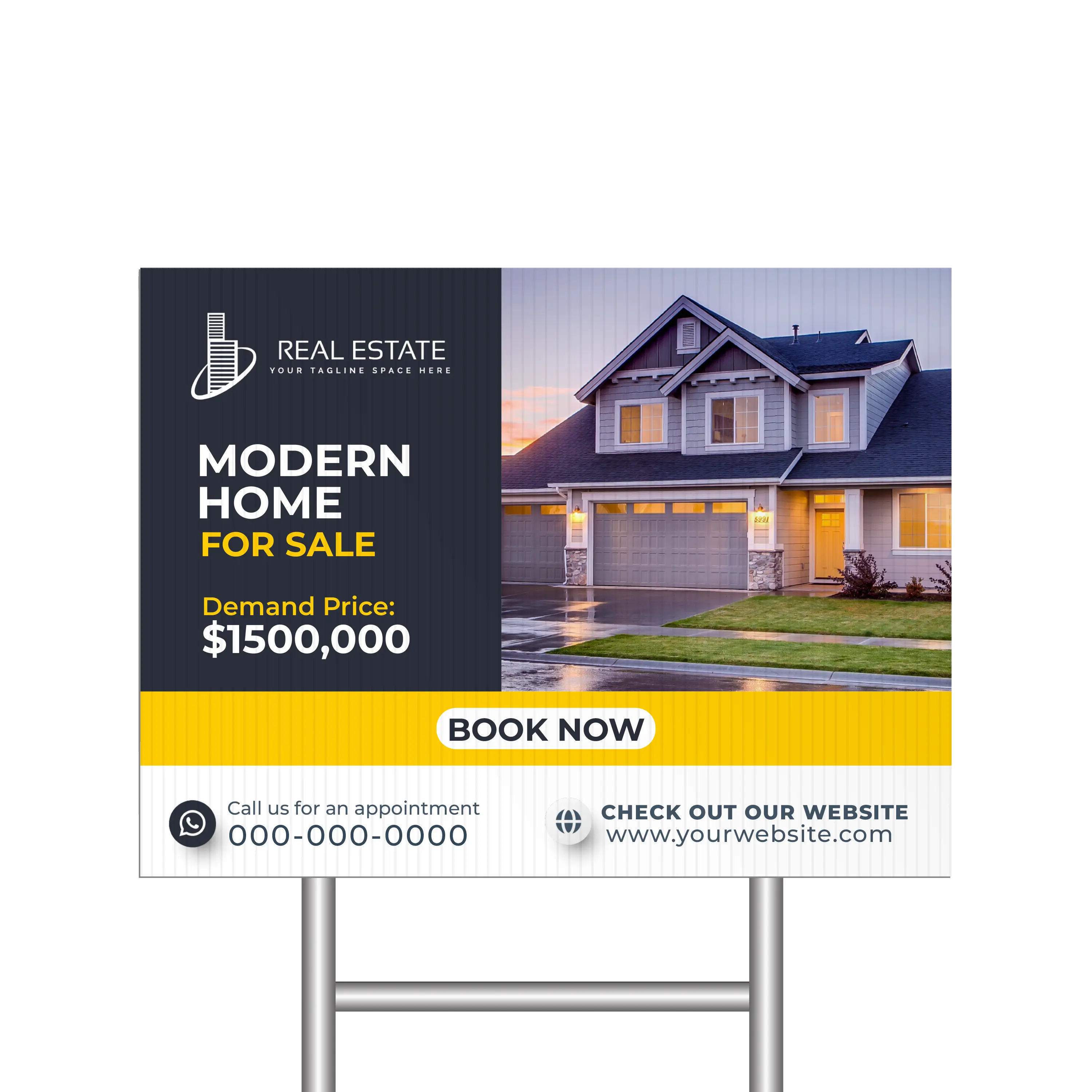
Agent name and photo are worth including on active listing signs in neighborhoods where you're building a sustained presence. Buyers who see the same agent name across multiple listings in a two-mile radius start to associate that agent with the market. That association compounds over a few years of consistent signage. Your real estate yard signs should carry your brokerage colors and brand standards, but your name should be at least as prominent as the brokerage logo.
Stage 3: Open House
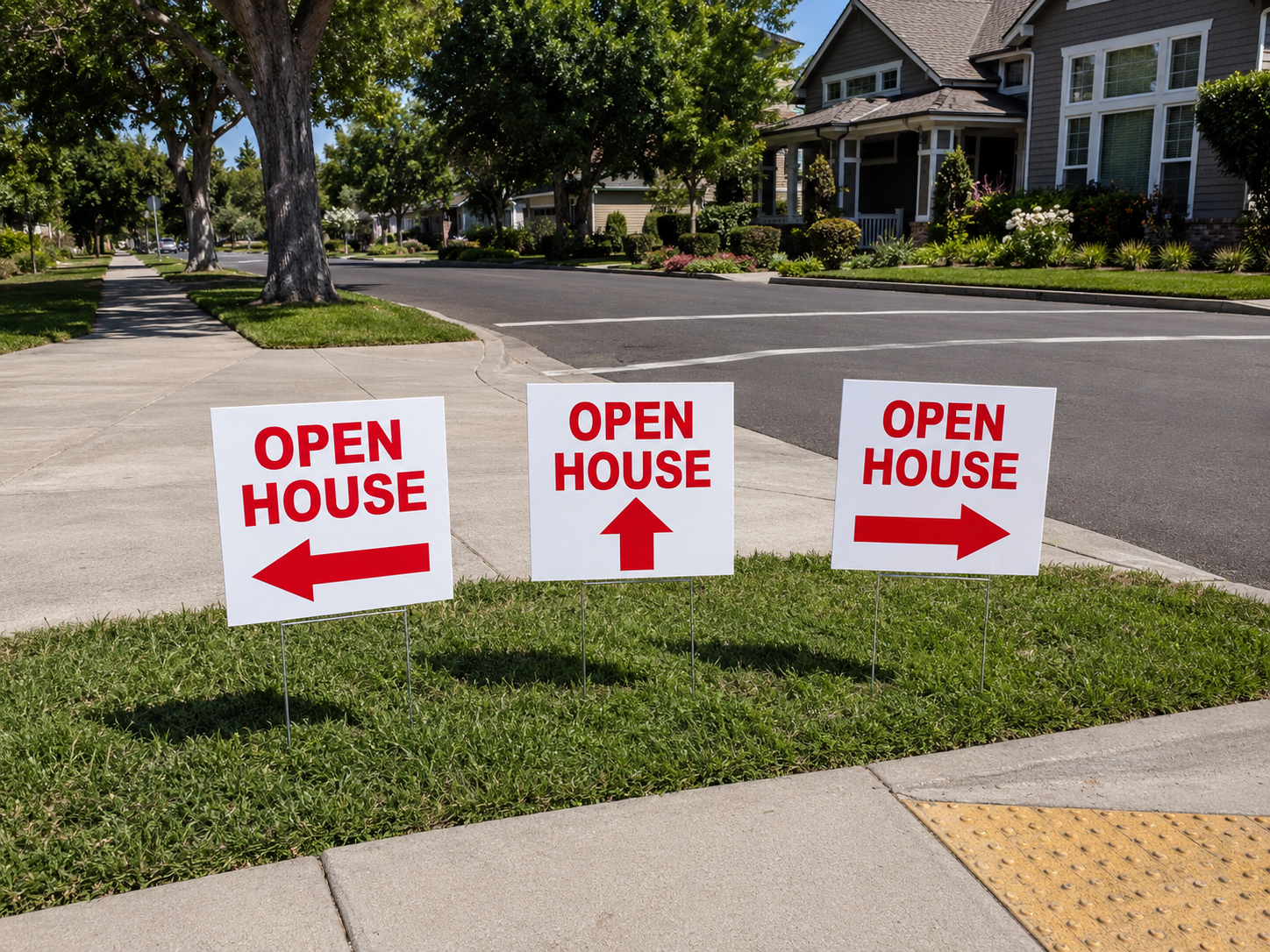
Open house signs are a separate category from listing signs, and they serve a completely different purpose. Where a listing sign stays put and builds passive awareness, open house signs direct active foot traffic. They need to appear at every turning point between the nearest arterial road and the front door.
The standard open house sign placement is:
-
One sign at the nearest major cross street,
-
One at each turn, and one at the property itself.
For a property on a winding residential street, that can be six or seven signs for a single open house. Underinvesting here means people who started driving toward the property give up and turn around. For a listing in a neighborhood with complex routing, double your directional sign count.
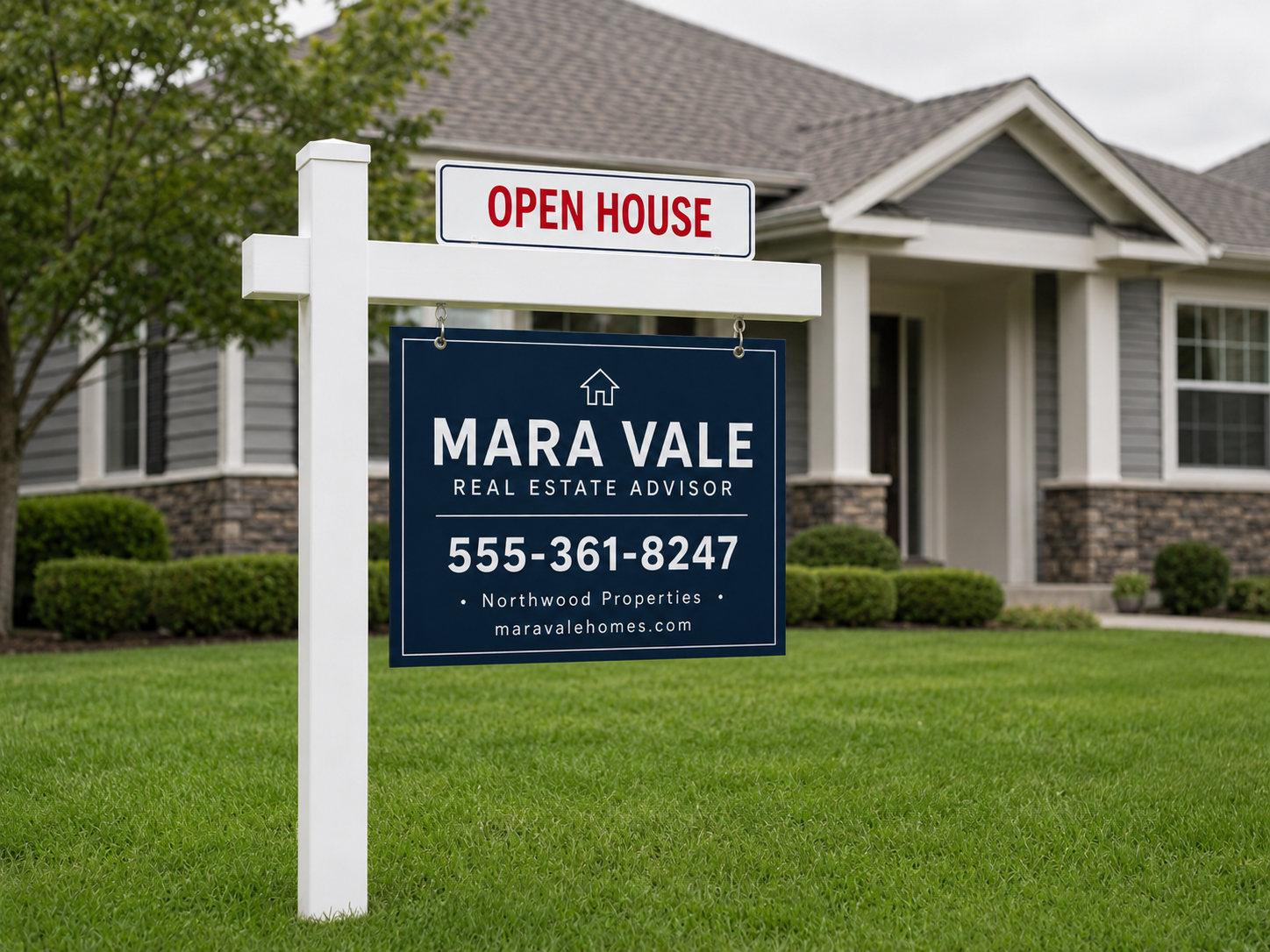
Open house signs pull the most foot traffic when they include the time window directly on the sign rather than requiring a rider swap. Printing "Open Sunday 1–4 PM" directly on the sign avoids the last-minute rider scramble and keeps the message clear from the curb.
Stage 4: Under Contract and Sold
Under contract and sold signs are the most underused signs in a realtor's toolkit. They do something the original for-sale sign cannot. They prove the outcome. A sold sign with your name on it is a conversion proof point that stays visible in the neighborhood until the next listing replaces it.
Sold signs placed within 24 hours, catch the highest neighborhood traffic window before curiosity about the sale fades. They also generate a specific type of inbound inquiry: neighbors who are thinking about listing their own home and want to know what theirs might sell for. That call comes directly to you because your name is on the sign.
How Sign Riders Extend What a Single Sign Can Do
A sign rider is a smaller panel that attaches above or below the main sign frame. Used well, riders add one specific piece of information that changes buyer behavior without requiring a full sign swap.
Riders That Drive Calls
The most effective riders answer the question a passing buyer is most likely asking at that moment. For a listing that photographs well, a "See Photos" rider with a QR code gets more scan engagement than a generic website URL. For a listing with unusual financing options, a "3.5% Down" or "VA Approved" rider stops buyers who assumed the property was out of reach.
Price-reduced sign riders work when used promptly. A price reduction that goes unannounced on the yard sign for two weeks while appearing on Zillow is a missed opportunity. The rider signals urgency to neighbors and drive-by traffic who haven't been watching the listing online.
Riders That Generate Your Next Listing
Agent info riders carry your name, number, and direct email. They function as a permanent business card on every sign you place.
In neighborhoods where you're actively farming, a rider that reads "Thinking of Selling? Call [Name]" turns every active listing into an outbound listing inquiry channel. The key is consistency. The same rider design, same phone number, and same color scheme across every sign in the farm area builds visual recognition faster than rotating designs.
Placement Strategy: Where Signs Actually Get Seen
Sign placement decisions have a bigger impact on exposure than most realtors account for. The same sign in two different locations on the same street can produce dramatically different results based on traffic patterns, sightlines, and drive direction.
Corner Lots and Traffic Direction
Corner lots are the highest-value placement in residential real estate sign strategy. A sign on a corner lot is visible from two streets instead of one, and it catches traffic moving in two directions. If you have a corner listing, placing signs on both street faces doubles your passive exposure with no additional print cost.
For non-corner listings, stake the sign on the side of the yard that faces the dominant traffic direction. In most residential neighborhoods, traffic runs heavier in one direction during morning commute hours and reverses in the evening. A sign staked to catch morning inbound traffic misses the evening return. If you're uncertain about the dominant direction, observe the street at both times before placing.
Setback and Visibility
The sign needs to be readable from a moving vehicle before the driver passes the property. That means the sign face must be perpendicular to the street, not angled inward toward the home. A sign turned 15 degrees toward the front door looks centered from the sidewalk but is nearly invisible from a car.
Setback from the curb matters in neighborhoods with speed limits above 30 mph. At 35 mph, a driver has only a few seconds to register a sign after it enters their field of view. A sign staked too close to the curb compresses that window. Pulling the sign 8 to 10 feet back from the curb edge, when the front yard depth allows, gives drivers more time to read and process the information.
For placement rules by municipality, the yard sign placement laws and regulations guide covers setback requirements in detail.
HOA-Restricted Neighborhoods
Some HOAs restrict yard signs to a single for-sale sign of a specific size, prohibit riders entirely, or limit placement to certain areas of the front yard. Check the CC&Rs before the listing goes active. A sign violation complaint filed in the first week of a listing creates unnecessary friction with the seller and the HOA.
In restricted communities, the for-sale sign itself needs to carry more information than in unrestricted areas, since riders aren't an option. A QR code built into the main sign design is often the cleanest solution.
Building a Sign System Across Your Book of Business
Realtors with a consistent sign presence across a geographic farm area build name recognition faster than those using inconsistent design across listings. The logic is simple. A buyer or neighbor who sees the same sign design at three listings in the same neighborhood within six months remembers the name. Someone who sees three different designs from the same agent across the same period registers none of them.
Standardize Before You Scale
Lock in a consistent sign design before you begin accumulating listings in an area.
Determine the following:
-
Color palette
-
Font style, color, and size
-
The layout for your name and contact information
The brokerage template handles part of this, but agent-level customization, including your name size, headshot placement, and rider colors, needs to be consistent across every order.
The easiest way to maintain consistency across multiple print orders is to save the exact file specifications from your first approved order and reuse them verbatim. Color drift between print runs is common when specs are re-entered manually. Reusing the original file eliminates the variable.
Team Signs and Dual Agent Listings
Teams with two or more agents covering the same farm area face a specific challenge: how to share sign real estate without crowding the design. The cleanest approach is a team sign with the team name as the primary identity and individual agent names on a rider rather than the main sign face. This keeps the main sign readable from the street while allowing the rider to display the individual agent's contact information.
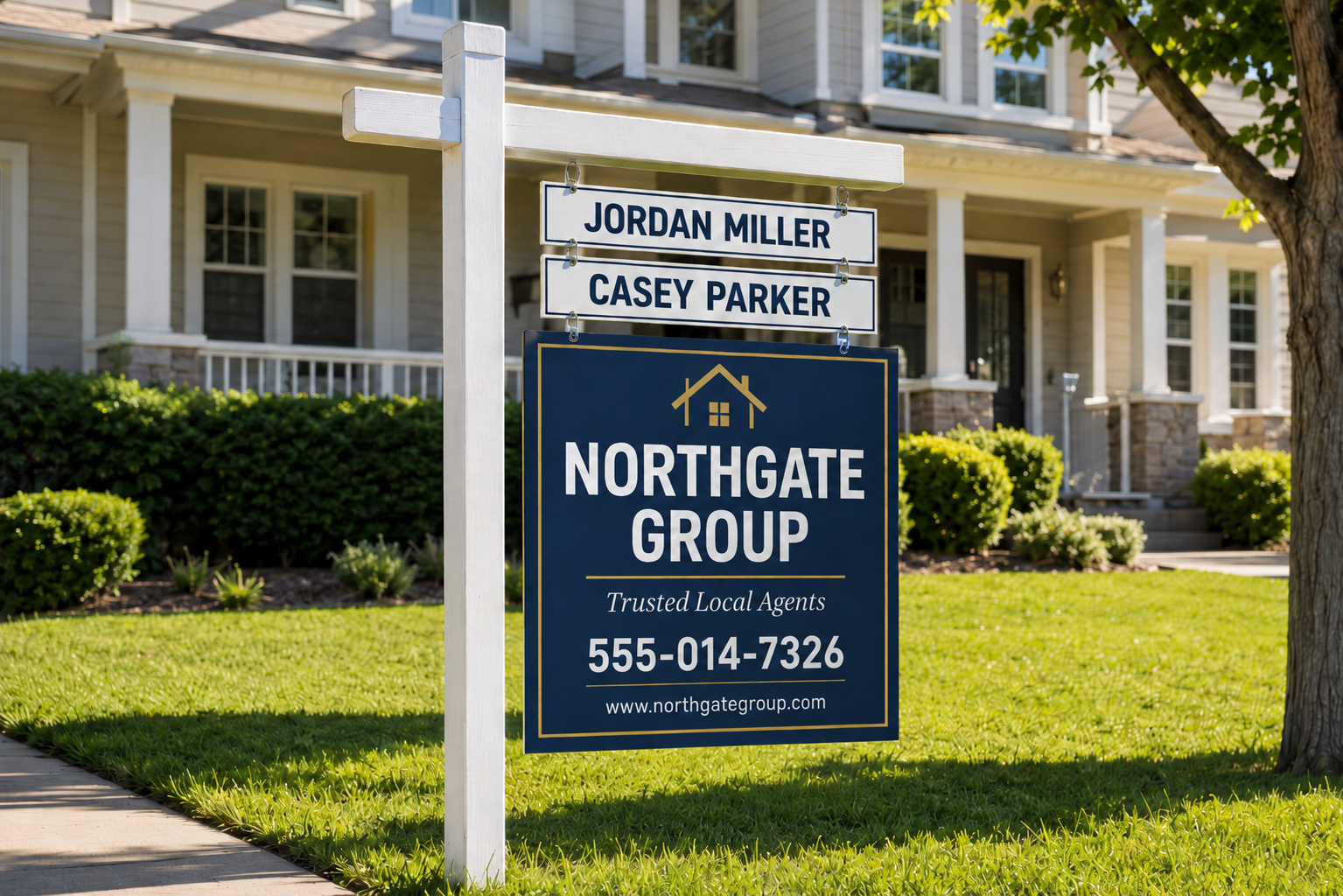
For co-listing situations, two names on one sign almost never reads cleanly at curb distance. A single team-branded sign with riders for each agent works better visually and gives each agent a rider they can also use independently.
|
Listing Stage |
Sign Type |
Primary Function |
|
Pre-listing |
Coming Soon |
Capture motivated neighborhood buyers before launch |
|
Active listing |
For Sale + Agent Rider |
Passive brand exposure and buyer contact |
|
Open house |
Directional signs |
Route traffic to the property |
|
Under contract |
Under Contract rider |
Social proof and neighborhood awareness |
|
Closed |
Sold sign |
Conversion proof and listing inquiry trigger |
Just Sold (The Sign Moment Most Realtors Skip)
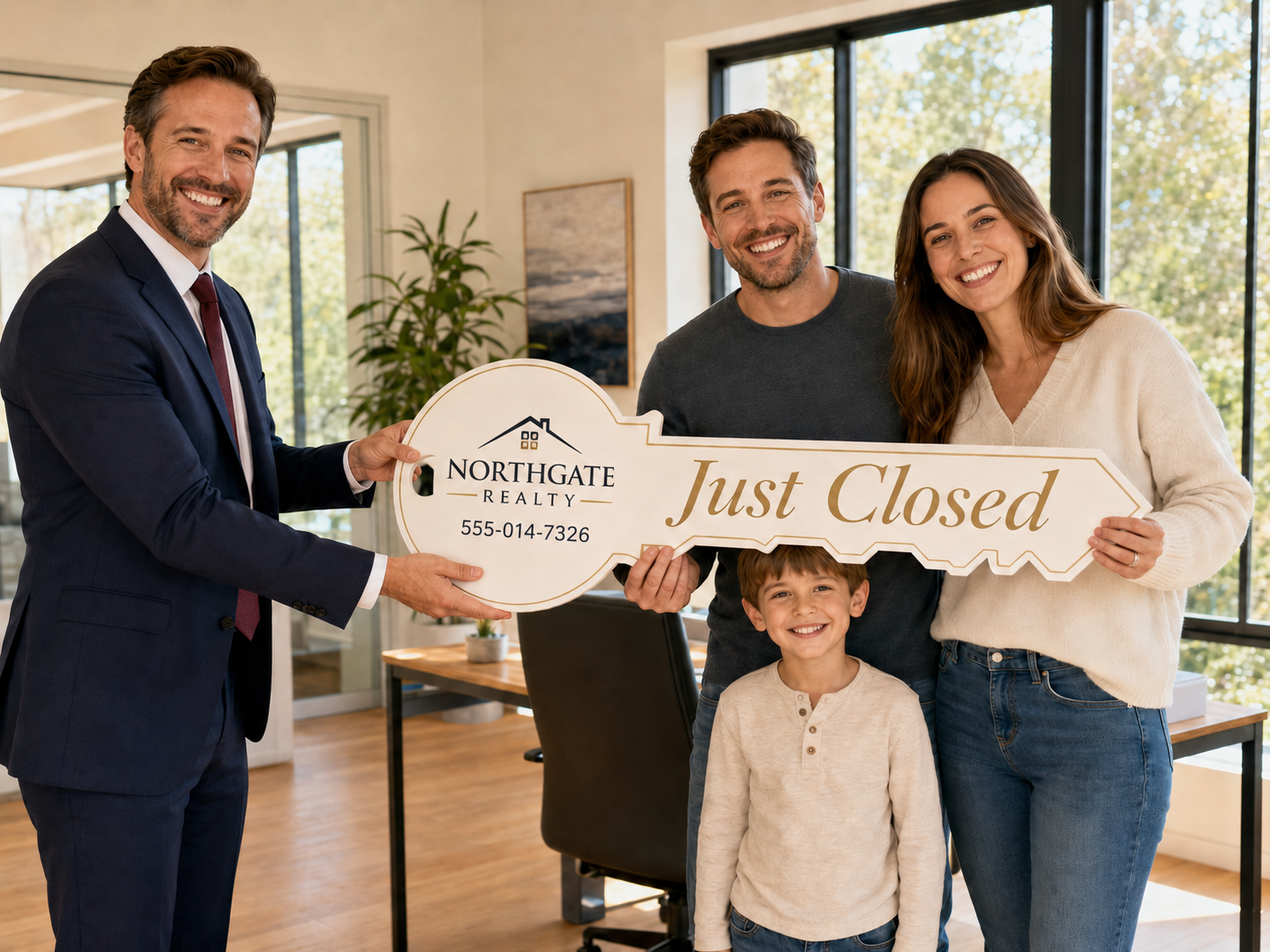
The period immediately after closing is the best moment for listing inquiry generation, and most realtors treat it as a cleanup task rather than a marketing opportunity. A giant realtor key sign or a bold "Just Sold by [Your Name]" sign, placed at the property within 24 hours of closing, captures neighbors' attention at exactly the moment curiosity about the sale is highest.
Just sold signs generate a specific type of conversation: neighbors who want to know the sale price and wonder what their own home might be worth. Those conversations are warm listing inquiries, and they happen because the sign created the opening. The window is short. Neighbors' curiosity peaks during the two to three days after a sale closes and then fades. Placement speed matters.
Quick Answers to Common Realtor Yard Sign Strategy Questions
How many signs do I need for a standard listing?
A standard single-family residential listing typically needs one for-sale sign, two to four open house directionals for each open house event, and one sold sign for post-closing. Corner lots may warrant two for-sale signs if the yard faces two streets.
What size is a standard real estate yard sign?
The most common size is 18 by 24 inches. Some brokerages require 24 by 36. The full real estate sign size guide covers brokerage standards, HOA restrictions, and frame compatibility.
Should I use a photo on my yard signs?
Agent photos work best in areas where you're building sustained name recognition across multiple listings. For one-off listings outside your primary farm, a clean name-and-number design without a photo is faster to read at curb speed.
How long do real estate yard signs last outdoors?
Corrugated plastic signs are rated for outdoor use and hold up well in sun and rain for a full listing cycle, typically two to six months. UV exposure over multiple seasons fades colors, so signs used across several years will need reprinting. For material specifics, the guide to what yard signs are made of covers the full breakdown.
Can I store and reuse real estate signs?
Yes, with one caveat. Signs with a specific sale price or date information are single-use. Signs with your name, brokerage, and contact information only can be reused across listings. Keep them flat and out of direct sun between listings. The yard sign storage guide covers the right storage setup.
How do I stake a sign so it doesn't fall over?
Standard H-frame wire stakes work well in most soil conditions, but in hard or rocky ground, use a stake driver rather than hand-pressing. For signs in high-wind areas or on slopes, crossing two stakes in an X pattern adds stability. The guide to securing yard signs in the ground covers stake selection and installation depth.
What goes on a real estate yard sign?
At minimum: brokerage name, agent name, and a direct phone number. Most agents also include a website or QR code. Design tips for maximizing readability at curb speed are in the real estate yard sign design guide.
Can I order real estate signs with no minimum?
Yes. Yard Sign Plus prints real estate signs with no minimum order, a free proof in about an hour, and ships next business day from our Houston facility.
Order your custom real estate yard signs with no minimum, no setup fees, and a free proof in about an hour. They ship the next business day.


Leave a Comment