

Real Estate Sign Sizes: A Complete Guide for Agents and Realtors
Most agents pick a size before they check anything else. That is usually the first mistake. The right real estate sign size is not a single answer. It follows from three things every agent should confirm before placing an order.
This guide covers the standard real estate sign sizes and dimensions, how to choose the right size for any listing, the rules that limit your options in many markets, and the sizing mistakes that lead to reprints. The Three-Check Rule in the second section walks through the decision in the order it should be made.
The Standard Real Estate Sign Sizes
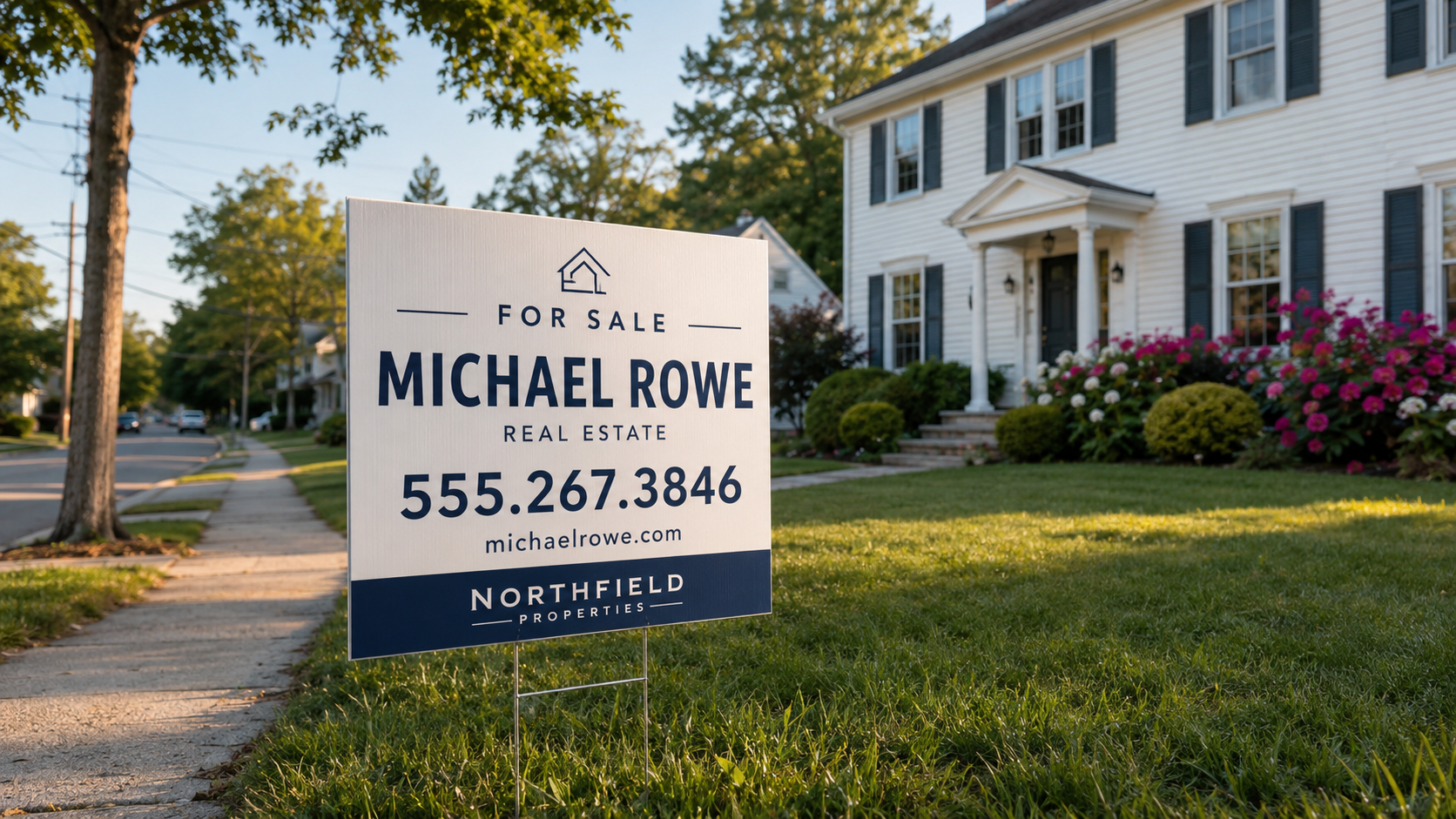
The standard real estate sign size for most residential listings is 18 by 24 inches. It fits every standard frame and H-wire stake on the market, it reads clearly from a typical suburban street, and HOAs in most markets allow it without restriction.
The table below covers the standard real estate sign dimensions for every sign type, so you can confirm what to order before the Three-Check Rule walks you through which size fits your specific listing.
Sign Type |
Standard Size |
Best For |
|
Residential yard sign |
18x24 inches |
Most single-family residential listings |
|
Larger residential |
24x30 inches |
Busy roads, larger lots, listings with deeper setbacks |
|
Commercial or high-visibility |
24x36 inches |
Commercial properties, fast roads, new construction, development sites |
|
Sign rider |
6x24 inches |
Agent name, phone number, Open House, Sold, Pending |
|
Open house yard sign |
18x24 inches |
Standard open house display in front yard |
|
Directional arrow |
12x18 inches |
Intersections and turn markers guiding buyers to the property |
Residential Yard Signs
18 by 24 inches is the right starting point for the majority of residential listings. It balances visibility, portability, and frame compatibility in one size that works almost everywhere. Agents looking to order custom real estate signs for a standard suburban listing rarely need to look beyond this dimension. If the property sits on a quiet street with a close setback and light traffic, 18x24 handles it cleanly.
Commercial and High-Visibility Listing Signs
For commercial properties, fast roads, and listings with deep setbacks, a larger sign earns its cost. A 24x30 is a solid step up from 18x24 — large enough to hold attention from a moving vehicle, manageable enough to stay within most commercial real estate sign dimension guidelines.
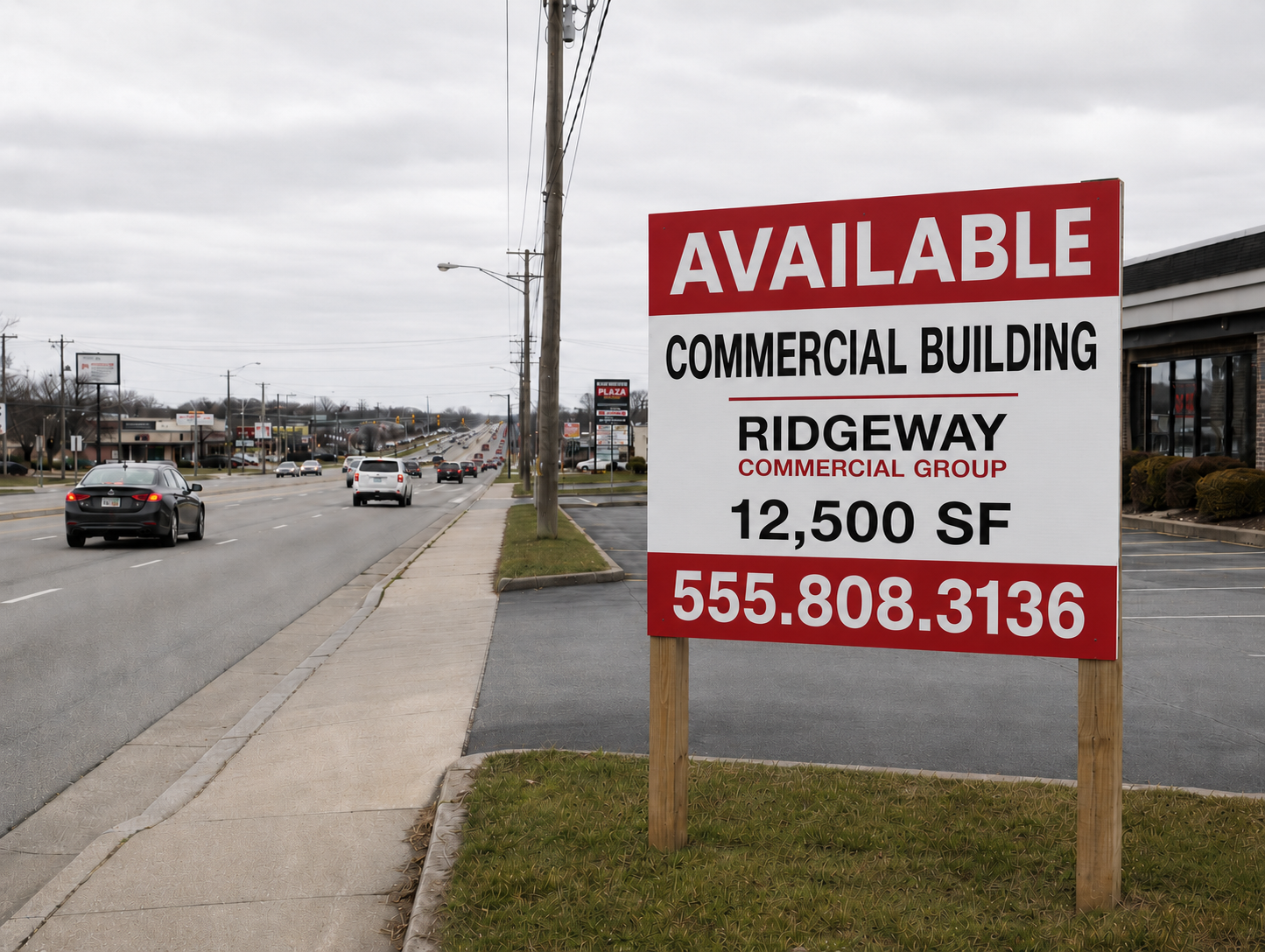
A 24x36 is the right call for high-traffic roads, large lots, or commercial buildings where maximum visibility is the priority. These sizes also work well for new construction and development sites where the sign needs to compete with visual clutter on a busy corridor.
Riders, Open House Signs, and Directionals
Real estate sign accessories each have a standard size determined by their function.
Here is what to order for each type:
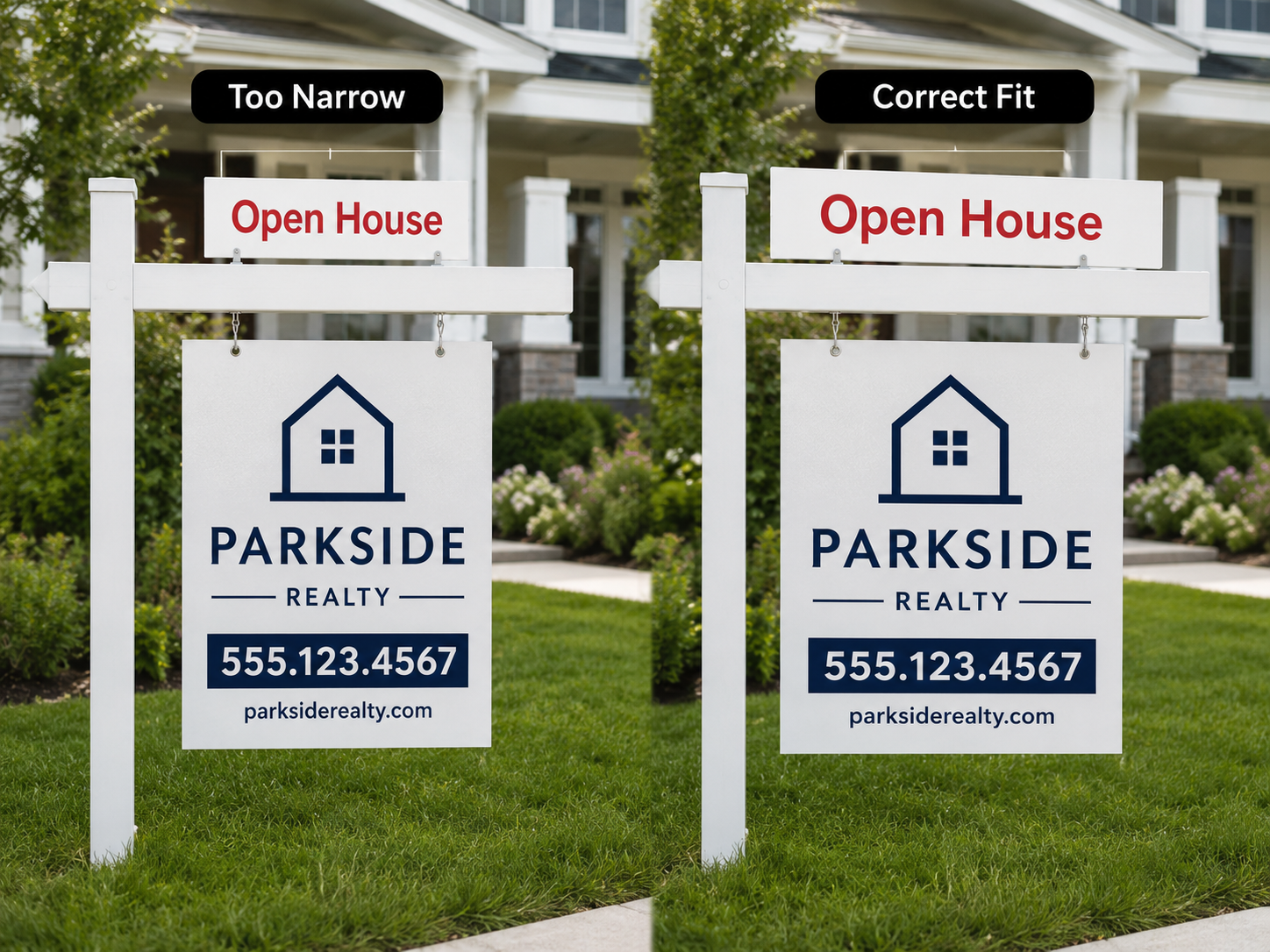
Real estate sign riders: 6 by 24 inches, matching the width of a standard 18x24 main sign. A rider narrower than the main panel looks off-balance and is one of the most common sizing mistakes agents make.
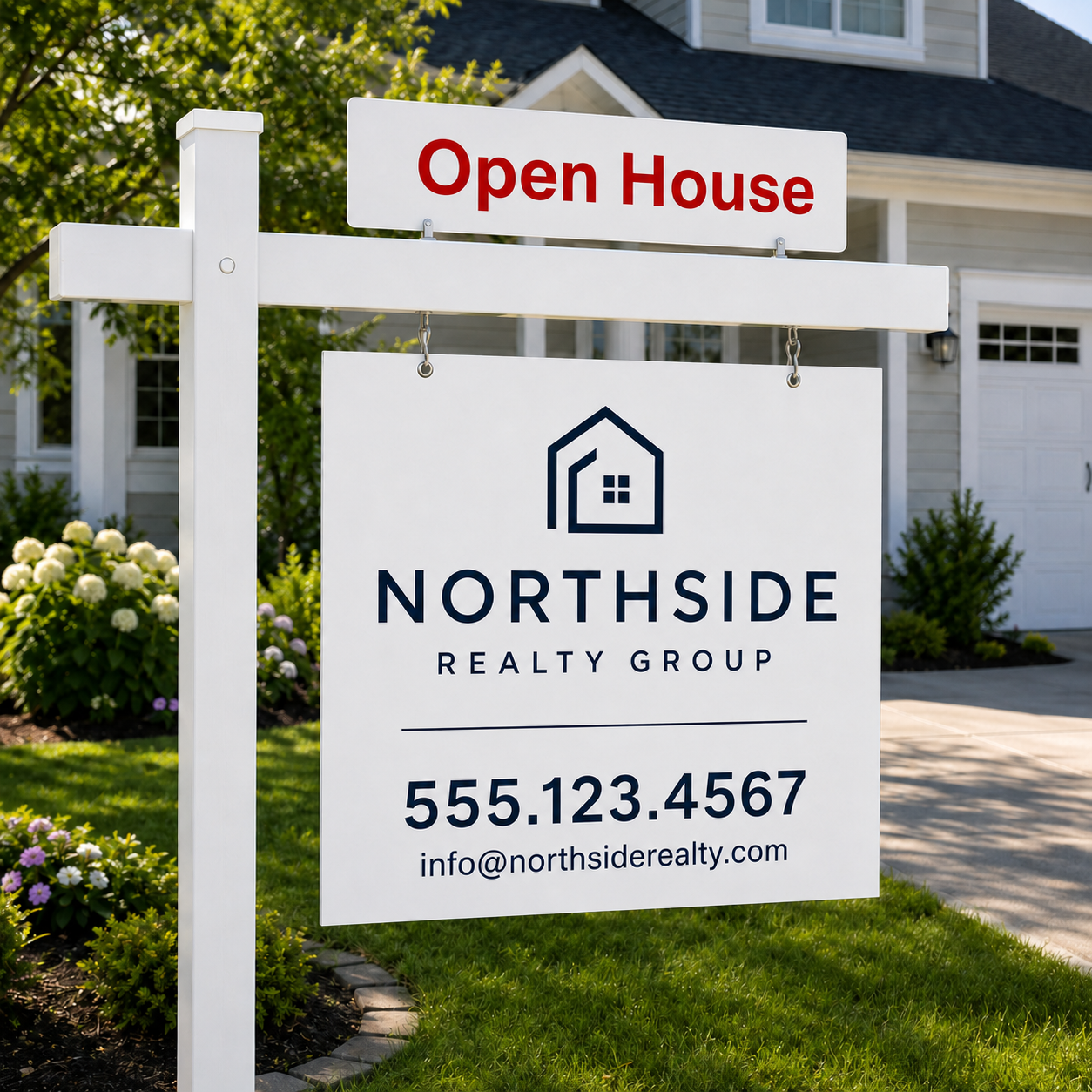
Open house signs: 18x24 inches for most yard placements. Step up to 24x36 for high-traffic intersections where drivers have less time to register the sign.
Die-cut directional arrows: 12x18 inches, compact enough to carry and stake at multiple turns without becoming a logistics challenge.
Agents looking to mark a closing in a memorable way can also explore our giant ceremonial keys, a popular choice for celebrating a buyer’s first home or a major commercial deal.
The Three-Check Rule: How to Choose the Right Size for Any Listing
Before ordering any real estate sign, run the Three-Check Rule in this order. Each check can eliminate options, and skipping any one of them is where most sizing mistakes begin.
Check 1: Confirm Your Restrictions (HOA, MLS, and Brokerage)
HOA rules, MLS guidelines, and brokerage compliance documents can all cap the sign size before any other factor applies. In Arizona, HOAs can legally enforce an 18x24 maximum, and the Central Arizona Association of Realtors confirms that sign infractions can result in fines or suspension of MLS access.
Even when a larger sign would be more visible, ordering one before checking restrictions can mean pulling it down and reordering from scratch. Franchise agents should confirm any brokerage-mandated dimensions before placing an order. Check the restriction first. Everything else follows from there.
Check 2: Factor In Road Speed and Setback Distance
A useful rule in sign design is that every inch of letter height gives about 10 feet of readable viewing distance. A phone number printed at 3 inches tall reads clearly from about 30 feet away, which covers most suburban setbacks on a quiet residential street. On a road where traffic moves at 40 or 45 miles per hour, that number needs to register in about two seconds.
If the setback is deep or the road is fast, the text needs to be larger, which means the sign needs to be larger. Quiet suburban street with a close setback: 18x24 is enough. Fast road, large lot, or deep setback: 24x30 or 24x36 gives the text room to scale up without crowding.
Check 3: Count How Much Goes on the Sign
The amount of information on the sign determines how much face is needed to keep everything readable. An agent running a clean design with a name, phone number, and brokerage logo fits comfortably on an 18x24. An agent adding a headshot, team name, multiple numbers, a website, and a QR code needs more surface to give each element room to breathe.
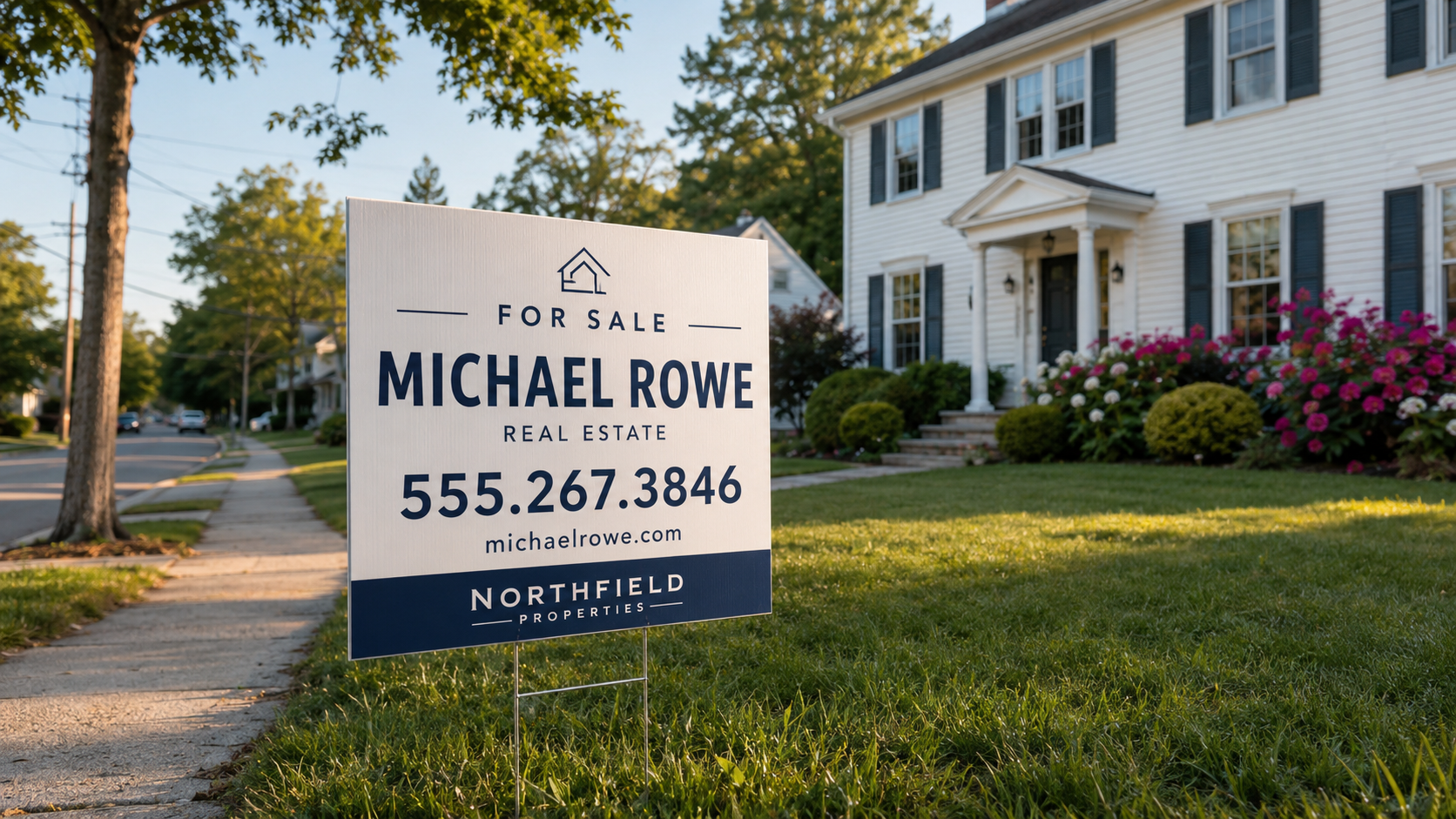
When elements compete for space on a small sign, everything becomes harder to read and nothing registers clearly. If the design is dense, step up to a 24x30 or 24x36 before placing the order. Readability wins almost every time over fitting more information onto a smaller panel.
When a Bigger Yard Sign Is the Wrong Call
Bigger is not always better, and there are two situations where a larger sign works against the agent.
In upscale or tight residential neighborhoods, an oversized yard sign can look out of place. When every property on a street has a tasteful 18x24 in the yard, a 24x36 draws the wrong kind of attention. A well-designed standard size often reads as more professional than a large panel with too much information on it.
For guidance on what actually belongs on a real estate sign and how to design it for maximum impact, see our guide on how to design a real estate sign that gets calls.
The second situation is frame compatibility. Most residential posts and metal frames are designed for standard sizes, typically 18x24 or 24x24. Agents who already own frames from another supplier need to match sign dimensions to the existing hardware before ordering. Custom dimensions that fall outside those standards often do not fit, which leads to a reorder.
Common Real Estate Sign Sizing Mistakes
These five mistakes show up consistently in agent orders and are all avoidable with the Three-Check Rule:
-
Ordering a rider narrower than the main sign. A 6x18 rider on an 18x24 main sign looks undersized and off-balance. The rider should match the width of the main panel.
-
Ordering a custom size without checking frame compatibility first. If the sign needs to fit an existing post or arm, confirm the hole pattern and dimensions before placing the order.
-
Choosing size based on price rather than the listing. A smaller sign costs less but fails on a fast road where it cannot be read at distance. The cost of a reorder usually exceeds the savings.
-
Going too large for a small or high-end property. An oversized sign on a tight lot or in a luxury market can generate complaints and undermine the listing presentation.
-
Skipping the HOA or MLS check and having the sign pulled. This is the most expensive mistake. Check restrictions before any other decision, not after the sign is already in the ground.
Frequently Asked Questions
What is the standard real estate sign size?
For most residential listings, 18 by 24 inches is the industry standard. It fits all standard frames and H-wire stakes, reads clearly from a typical suburban street, and is HOA-compliant in most markets.
What size are real estate signs for commercial listings?
Commercial listings typically use 24x30 or 24x36 signs. These dimensions provide the visibility needed for high-traffic roads and properties set back from the curb. For more on sizing by use case, see our standard yard sign size guide.
What size is a real estate sign rider?
The standard real estate sign rider is 6 by 24 inches, matching the width of an 18x24 main sign. A rider narrower than the main panel looks off-balance and is one of the most common ordering mistakes agents make.
What size is an open house sign?
Most open house signs use the same 18x24 dimension as a standard yard sign. For placement at busy intersections, a 24x36 provides better visibility from a moving vehicle. Directional arrows are typically 12x18.
Can my HOA limit the size of my real estate sign?
HOAs can cap real estate sign sizes, and 18x24 is the most commonly enforced limit in residential markets. MLS violations for non-compliant signs can result in fines or suspension of MLS access. Check local rules before ordering.
What are the real estate sign dimensions for a for sale sign?
Most for sale yard signs measure 18 by 24 inches for residential listings and up to 24 by 36 inches for commercial properties or high-visibility placements. See our full collection of custom for sale yard signs for available sizes and templates.
Does my brokerage have a required sign size?
Franchise agents with Keller Williams, RE/MAX, Coldwell Banker, and Century 21 often operate under standardized sign programs with set dimensions. Check your brokerage compliance documents before placing any order.
Will my sign fit my existing post or frame?
Standard residential posts and frames are designed for 18x24 or 24x24 signs. If you use hardware from a different supplier, confirm the hole pattern and dimensions match your order before purchasing.
Once you know the right size, ordering is straightforward. Browse our full collection of custom real estate signs and get a free proof in about 1 hour.



Leave a Comment