

2026 Midterm Sign Deadlines and Rules: What Every Campaign Needs to Know
The 2026 midterm general election is on Tuesday, November 3, 2026. Every U.S. House seat is on the ballot, along with 35 Senate seats and hundreds of state and local races. For campaigns ordering signs, that date is the anchor point. Everything else—when to put signs up, when to take them down, and what the signs must say—works backward from it.
This guide covers the federal-level rules that apply to all campaigns running federal candidates, the common state-level patterns that appear in most jurisdictions, and the specific rules for Texas, California, Florida, and New York. It also covers the 2026 timing window so campaigns know when signs need to be deployed relative to early voting and Election Day.
One important note before we start: sign placement rules are set at the state and municipal level, and they vary significantly. The rules in this guide are accurate to the best of our knowledge, but always verify the current rules with your local election office before deploying signs. Local ordinances can and do change.
The 2026 Midterm Calendar: Key Dates for Sign Campaigns
Understanding when to deploy signs requires knowing the full campaign calendar, not just Election Day. Early voting in most states opens four to six weeks before November 3, which means the window where signs generate the most impressions starts in late September — not October.
|
Event |
Date |
Notes for Sign Campaigns |
|---|---|---|
|
Primaries (vary by state) |
March–August 2026 |
Signs must comply with local rules for each primary date. States with June/August primaries are still active late in the cycle. |
|
Early voting opens (most states) |
Late September 2026 |
This is when sign density matters most. Voters making decisions are already casting ballots. |
|
General Election Day |
Tuesday, November 3, 2026 |
Final day votes can be cast. All 435 House seats and 35 Senate seats on the ballot. |
|
Post-election removal window |
November 4–December 2026 |
Varies by state and municipality. Federal law does not set a universal removal deadline. |
The practical implication is that signs should be ordered by early September to allow for production, shipping, and deployment before early voting opens. Waiting until October means missing four to six weeks of impressions on voters who are already deciding.
Federal Rules That Apply to All Campaign Signs
A handful of rules apply at the federal level regardless of what state the campaign is in. These are the floor, not the ceiling. State and local rules layer on top of them.
The "Paid For By" Disclaimer Requirement
Any yard sign for a federal candidate — U.S. House, U.S. Senate — must include a disclaimer identifying who paid for it. The required language is "Paid for by [Committee Name]" set in a printed text box on the sign. The text must be large enough to be clearly readable and must appear with reasonable color contrast against the background.
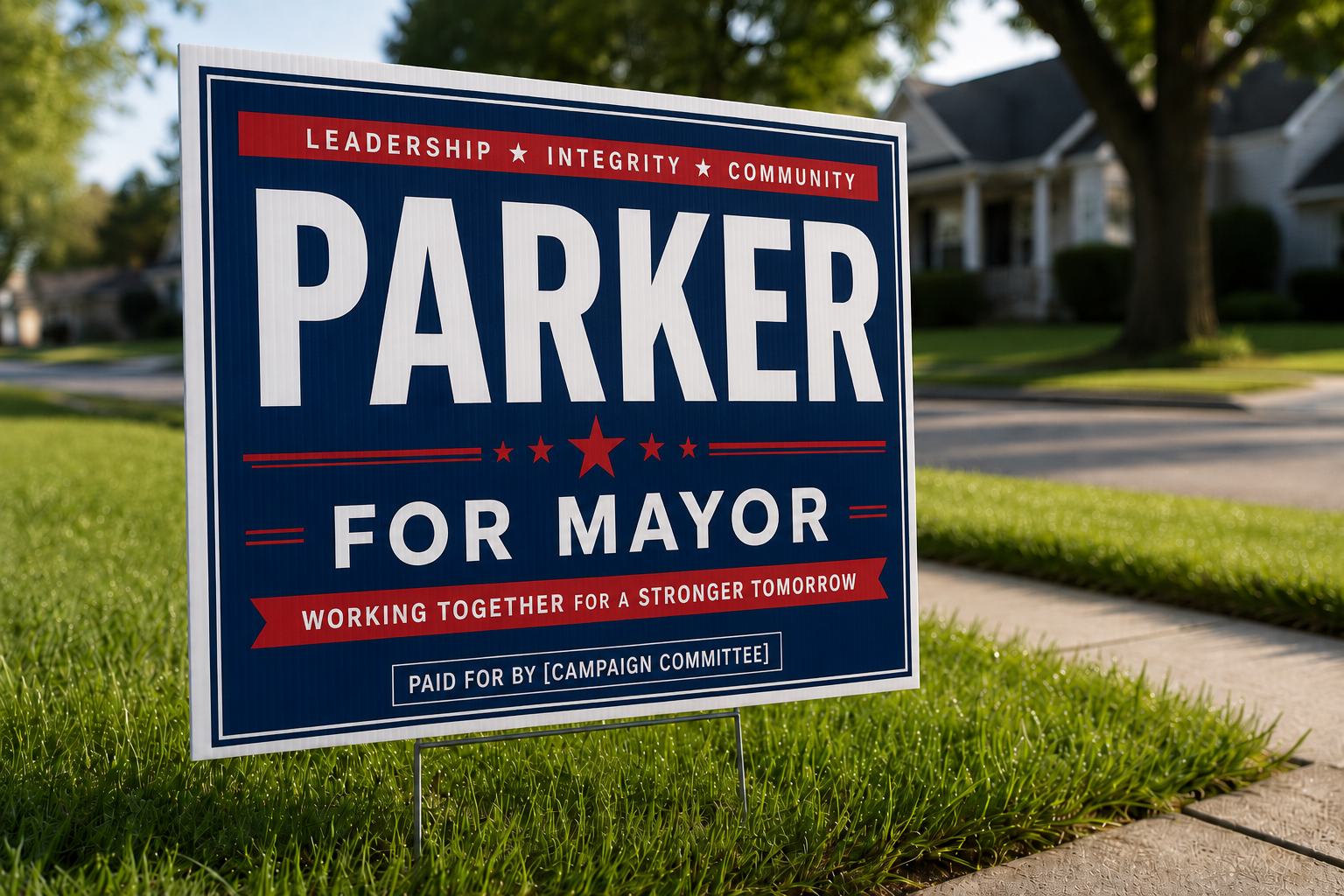
If the sign is authorized by the candidate's own committee, it must say so. If it was paid for by an outside group not authorized by the candidate, the disclaimer must state that it was not authorized by any candidate or candidate's committee.
This requirement comes from FEC regulations (11 CFR § 110.11). It applies to printed yard signs, banners, and door hangers. Missing the disclaimer is an FEC violation and has resulted in formal complaints against campaigns.
The Federal Highway Placement Restriction
Federal law prohibits placing signs within 660 feet of an interstate or federal highway, including on-ramps and off-ramps. This applies to all signs, not just political ones. Any sign visible from a controlled-access highway right-of-way is subject to this restriction under the Highway Beautification Act.
First Amendment Protections for Private Property
The U.S. Supreme Court has repeatedly upheld the right of private property owners to display political signs on their own residential property. Municipalities cannot ban political signs on private property outright, and pre-election timing restrictions on private property signs are generally unconstitutional under First Amendment case law.
What governments can regulate: placement on public property, size limits in some contexts, and post-election removal timelines. What they generally cannot do: prohibit political signs on private property with the owner's consent, or require permits for standard residential yard signs.
Common State-Level Rules and What to Expect
While rules vary by jurisdiction, most states follow a consistent set of patterns. Knowing these patterns helps campaigns plan even before they've confirmed their specific local ordinances.
Right-of-way is almost always off-limits
In virtually every state, placing signs on public right-of-way—medians, sidewalk strips, utility easements, and highway shoulders—is prohibited or heavily restricted. Signs placed in these areas are routinely removed by local authorities, sometimes without notice.
Polling location buffer zones are universal
Every state has a campaign-free buffer zone around active polling locations on Election Day. The distance varies—commonly 100 to 200 feet—but the rule is consistent. Signs within the buffer zone must be removed before Election Day or will be taken down by election officials.
Removal deadlines range from 3 to 30 days post-election
Most jurisdictions require signs to come down within one to four weeks after the election. The specific deadline depends on state law and local ordinance. Some municipalities publish removal schedules on their election office websites. Our guide to how long to leave political signs up covers this in more detail.
Disclaimer requirements exist at the state level too
Many states require disclaimers on signs for state and local candidates, independent of the federal FEC requirement. The required language varies. Several states require the disclaimer to identify not just who paid for the sign but also that it was or was not authorized by the candidate. Check your state's election code or contact your state party office before printing.
Size limits apply in some jurisdictions
California limits temporary political signs to 32 square feet. Other states and municipalities have their own size caps. Standard 18x24 and 24x36-inch yard signs fall well within most limits, but oversized banners or large format signs may require review before deployment.
2026 Sign Rules by State
The table below covers the top 10 states with significant races in the 2026 midterm cycle. These are general state-level guidelines. Local ordinances within each state may be stricter. Always verify current rules with your county or city election office before deploying signs.
|
State |
2026 Primary |
General Election |
Placement Rules |
Removal Deadline |
Disclaimer Required |
|---|---|---|---|---|---|
|
July 21, 2026 |
Nov 3, 2026 |
Signs protected starting 71 days before primary. No public right-of-way. HOAs can regulate but not ban during protected period. |
Within 15 days after general election |
Required. 'Paid for by [committee].' HOAs cannot impose stricter disclaimer rules than state law. |
|
|
June 2026 |
Nov 3, 2026 |
No signs on highway right-of-way or within 660 ft of landscaped freeway. Max 32 sq ft. Statement of Responsibility must be filed with the state. |
Good-faith effort within 30 days of election or candidate withdrawal |
Required. Campaign must file Statement of Responsibility. Unauthorized removal is prohibited. |
|
|
Varies by race |
Nov 3, 2026 |
No signs on state or county road right-of-way or attached to trees, light poles, or traffic signs. Private property with owner consent is fine. |
Good-faith effort within 30 days after election, withdrawal, or elimination |
Required. One person must be registered with the state as contact for sign removal. |
|
|
May 19, 2026 |
Nov 3, 2026 |
No signs on public property or road rights-of-way. GDOT removes violations; signs held 30 days then destroyed. No restriction on timing for private property. |
7–10 days post-election (varies by local ordinance) |
Required. Must disclose sponsor identity and funding source. |
|
|
August 4, 2026 |
Nov 3, 2026 |
No signs on state highway rights-of-way. Signs must be 30+ ft from roadway edge on state roads. Private property with owner permission is standard. |
Within 10 days after election (MDOT requirement for state highway areas; local rules may vary) |
Required under Michigan Campaign Finance Act. 'Paid for by [Committee Name]' is standard practice; verify exact language for your race. |
|
|
June 9, 2026 |
Nov 3, 2026 |
No signs on public property or government buildings. Highway signs: no earlier than 60 days before primary. Local rules vary by city. |
15–30 days post-election (varies by city; Las Vegas requires 15 days for primary losers) |
Required. Must identify the responsible entity. |
|
|
June 23, 2026 |
Nov 3, 2026 |
No signs on public property. Local municipalities set their own rules. Varies significantly by county and city. |
Varies by municipality. State default is typically 3–15 days. Confirm with local ordinance. |
Required. State and local disclaimer rules apply. Local rules may be stricter than state minimum. |
|
|
May 5, 2026 |
Nov 3, 2026 |
No signs on public property, schools, or government buildings. Polling location buffer applies. Some cities restrict timing (e.g., 30 days before election). |
Within 14 days after election (some localities stricter) |
Required under Ohio Revised Code 3517.20. Must include name and address of paying entity. Enforced by Ohio Elections Commission. |
|
|
May 19, 2026 |
Nov 3, 2026 |
No signs on PennDOT right-of-way. Signs generally allowed up to 90 days before election on private property. Local rules vary widely by municipality. |
Within 7 days after election (state guidance); local ordinances range from 48 hours to 14 days — confirm locally |
Required. Must clearly state the responsible campaign or committee. |
|
|
March 3, 2026 |
Nov 3, 2026 |
No signs more than 90 days before election. No right-of-way. TxDOT removes violations without notice and bills the campaign for removal costs. |
Within 10 days after election |
Required. Federal candidates follow FEC rules; state races governed by Texas Election Code and Texas Ethics Commission. |
For a broader look at placement rules across more states, our full guide to yard sign laws and regulations covers the general framework that applies in most jurisdictions.
When to Order Yard Signs for the 2026 Midterms
The most common campaign sign mistake is ordering too late. By the time Election Day is a month away, a meaningful share of voters in most states have already cast their ballots through early voting. Signs that go up in late October are missing the window that matters most.
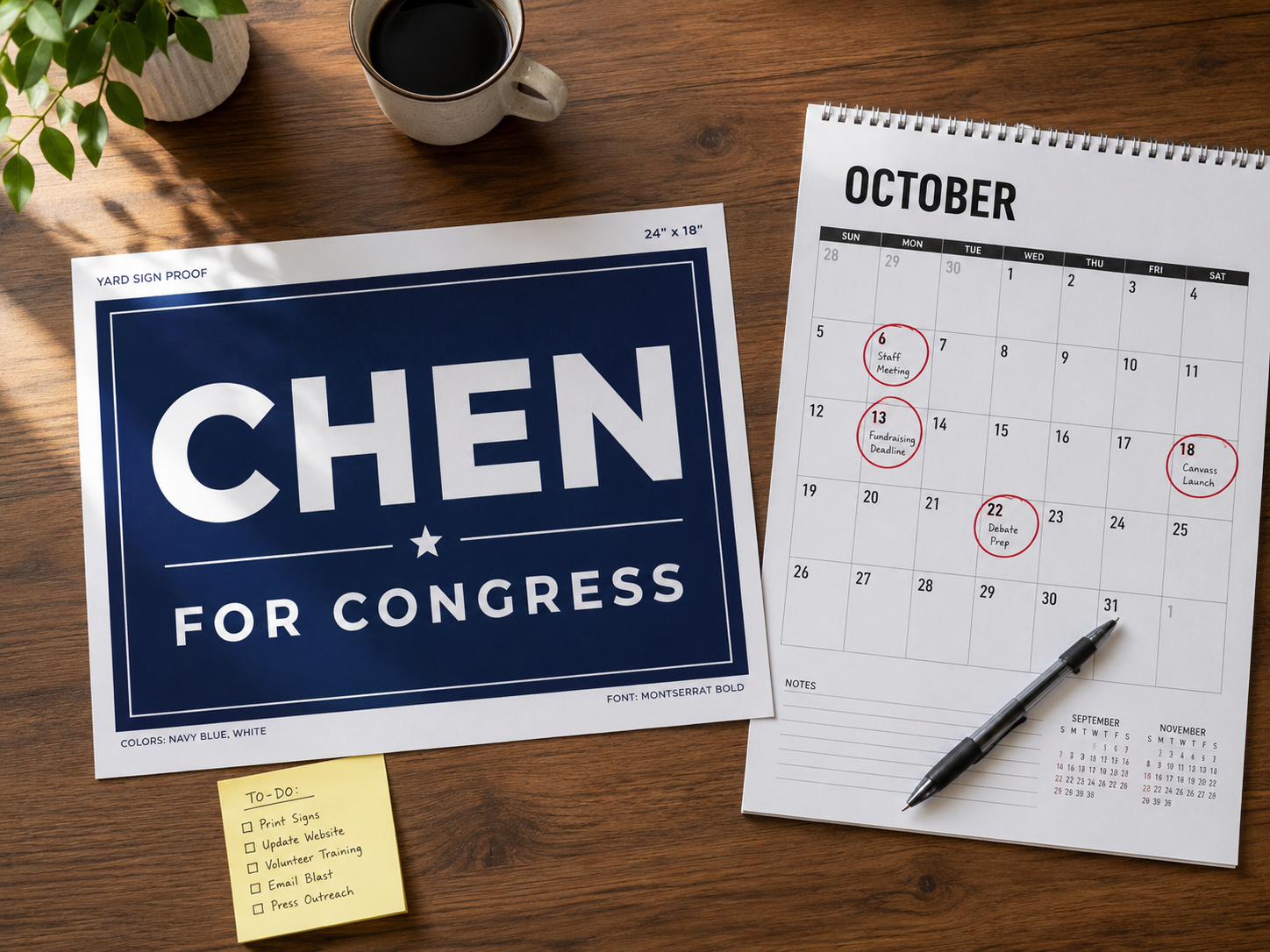
The recommended sign deployment timeline for November 3
Order by early September
Place your sign order in September to allow for production, proofing, and shipping before early voting opens in late September. Most standard corrugated plastic yard signs ship next business day, but bulk orders for large campaigns benefit from additional lead time.
Deploy before early voting opens
In most states, early voting opens in mid-to-late October. Signs deployed before this window are seen by voters who are already in decision mode. Signs deployed after early voting closes are seen only by Election Day voters, which in competitive races is a shrinking share of total turnout.
Primary campaigns: order 8–10 weeks before your primary date
If you're running in a primary, your sign timeline runs on your state's primary date, not November 3. Texas's primary was March 3. California's is June 2026. New York's is June 23. Work backward from your specific date and order early enough to be deployed before early voting for that primary opens.
What Has to Go on a 2026 Campaign Yard Sign
Beyond the legal requirements, effective campaign signs follow a simple formula. Voters give a sign about three seconds of attention from a passing car. Every element has to earn its place.
-
Candidate name. The largest element on the sign. Bold, high contrast, readable from 50 feet.
-
Office sought. "For U.S. Senate" or "For Congress" tells voters immediately what they're looking at.
-
"Paid for by" disclaimer. Required for federal candidates. Must appear in a printed text box with sufficient size and contrast. This is not optional.
-
Website (optional but recommended). Gives voters a next step after seeing the sign. Keep it short — a campaign URL that's longer than 20 characters is hard to remember.
For design guidance on colors and fonts that maximize readability at road speed, our yard sign color guide and best fonts for yard signs cover the principles that apply to campaign signs. For campaign-specific design ideas, see our campaign sign ideas guide.
HOA Rules and Rental Properties: What Supporters Need to Know
The First Amendment protections that cover residential yard signs apply to government regulation — not to private agreements like HOA covenants or rental leases. The result is a gap that catches a lot of supporters off guard.
HOAs can restrict political signs
In most states, homeowners associations can limit or prohibit political signs on properties within their jurisdiction. Some states have laws that override HOA restrictions for political signage, but these vary. Check your HOA's governing documents and your state's specific statute before posting a sign in an HOA community.
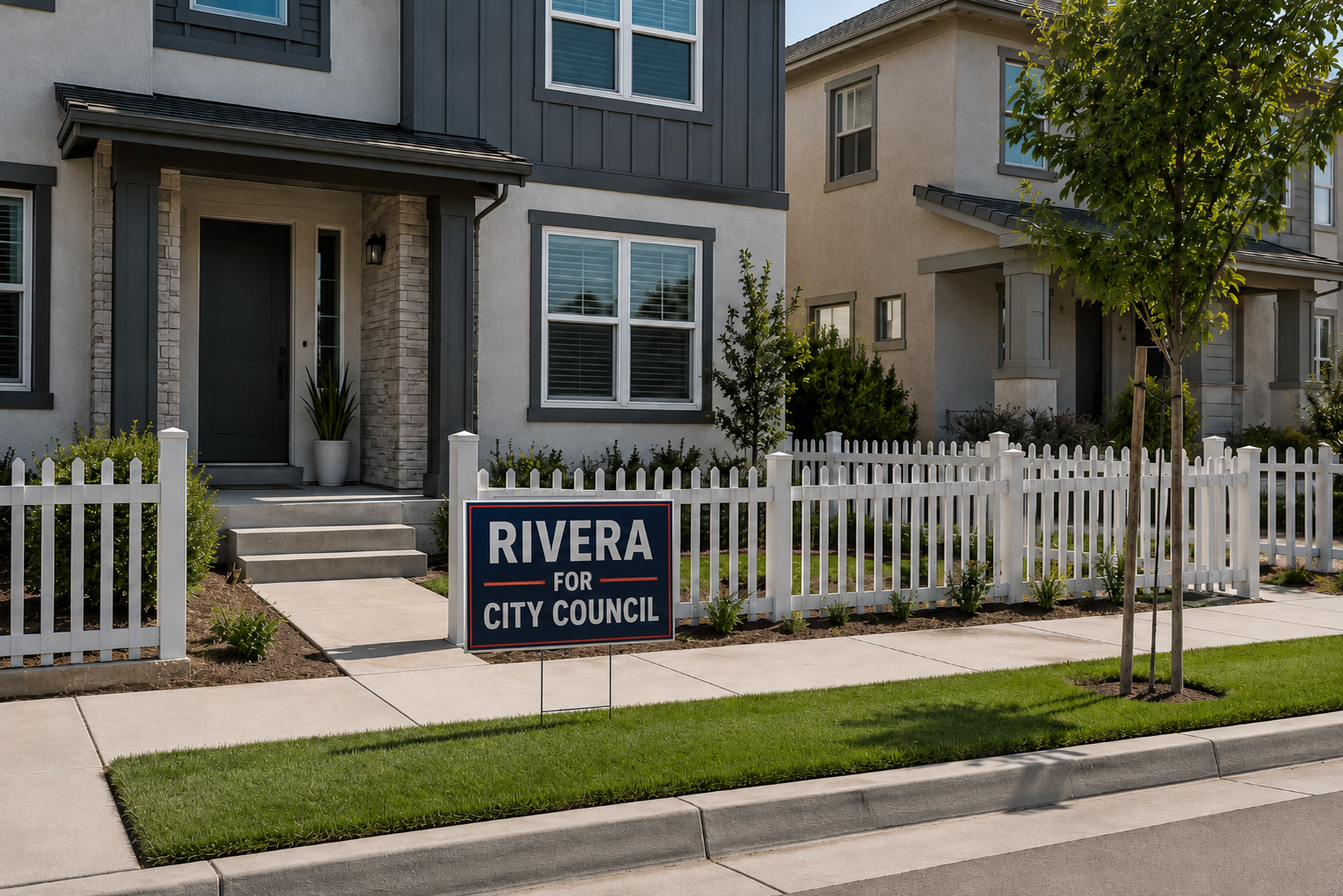
Renters need landlord permission
A renter's right to display a political sign depends on the property owner's permission and any applicable lease terms. In Texas, state law specifically protects political signs but ties that protection to the property owner's consent. A landlord who objects can require removal. The same pattern holds in most other states.
We print political yard signs with free proof in about an hour, overnight production, and no minimums. Order one sign to proof your design or a full campaign quantity. The bulk order program brings cost per sign down significantly for campaigns ordering in volume.




Leave a Comment