

How to Get Campaign Supporters to Put Signs in Their Yards
A yard sign in a supporter's yard does two things a sign on public property cannot do. It carries a personal endorsement from the person who lives there, and it stays up in a location where it's seen daily by that homeowner's neighbors, friends, and family. Research from Yale political scientists found that yard signs in residential lawns increased vote share by 1.7 percentage points in contested local races. That effect comes entirely from the sign being on someone's property, not just on a corner.
Getting supporters to host signs is a separate skill from buying signs and staking them yourself. It requires asking well, making it easy to say yes, and following through in a way that makes supporters want to help again. This guide covers the full process, from identifying the right people to ask, through building a sign distribution network that runs without you managing every location manually.
For the broader campaign strategy around political yard signs, the political yard sign playbook covers volume, timing, and design in full.
Who to Ask First and Why It Matters
Most campaigns ask everyone at once and get a poor response rate because the ask feels impersonal. The better approach is to tier your supporters by three criteria: visibility of their property, depth of their support, and their influence in the neighborhood. Starting with your highest-rated supporters and working outward produces better placement and better sign retention than a mass ask.
High-Visibility Properties
A sign on a corner lot, on a street with heavy commuter traffic, or near a school, church, or grocery store generates more impressions than a sign on a quiet cul-de-sac. Before you ask anyone, map the highest-traffic residential streets in your district and identify any supporters who live on them. Ask those supporters first and specifically. Tell them why their location matters. People are more likely to say yes when the ask is specific and they understand their particular contribution.
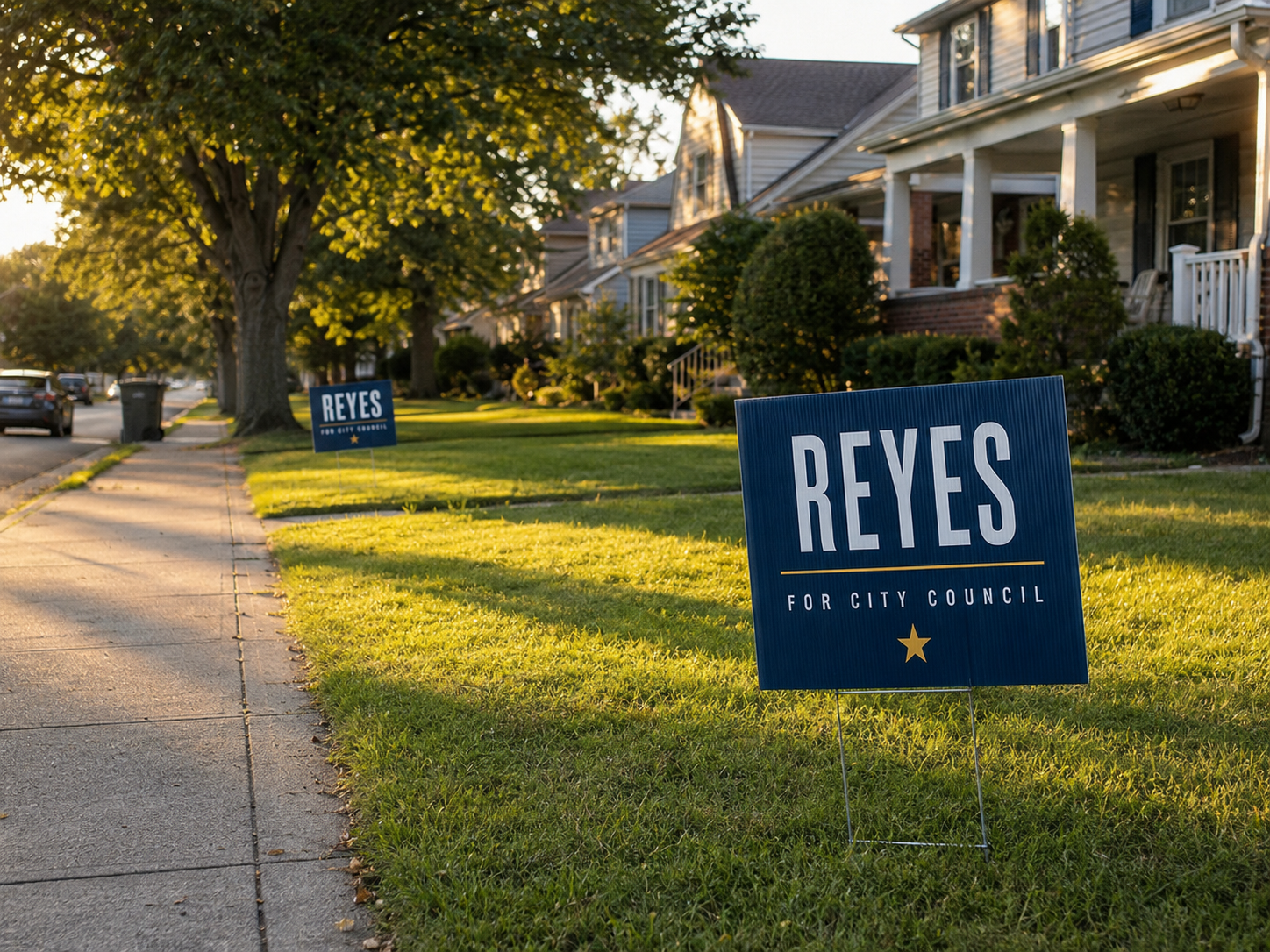
Arterial roads and collector streets are the priority tier. A single yard sign on a street that carries 5,000 cars per day outperforms ten signs on low-traffic residential streets in total impressions. A few well-placed signs in the right locations contribute more to name recognition than a large number of signs spread evenly across every street in the district.
Depth of Support
Depth of support predicts whether a sign stays up. A reluctant supporter who agreed to take a sign because they felt social pressure is the same person who calls you two days later saying their spouse didn't want it, or who pulls the sign down themselves after a week.
-
Prioritize supporters who have already demonstrated commitment: donors, volunteers, people who attended a campaign event, and people who reached out to you rather than the other way around.
-
For first-time candidates without a volunteer list, start with your personal network. Friends, family, former colleagues, and neighbors who already know you are the most reliable early sign hosts. Their signs are also more likely to generate conversations with their neighbors, which is where the real network effect of residential sign placement comes from.
Neighborhood Influencers
Every neighborhood has people whose opinions carry weight with their neighbors: long-time residents, HOA board members, coaches, teachers, and local business owners who live in the district. A sign in their yard signals something different than a sign in an anonymous house. If you can identify two or three of these people per precinct and get their signs up early, their signs often prompt neighbors to ask for signs themselves.
How Campaigns Ask for Yard Sign Placements
The way you ask determines your yes rate more than almost any other factor. The three most common mistakes are asking too broadly, making it sound like a burden, and asking without giving the supporter a reason specific to them.
Ask in Person or by Phone First
In-person and phone asks convert at a higher rate than text or email for yard sign hosting. A personal ask signals that you thought specifically about this person, not that you're sending a mass request. It also gives you a chance to answer objections immediately rather than losing the conversation when someone reads a text message and decides it's not urgent.
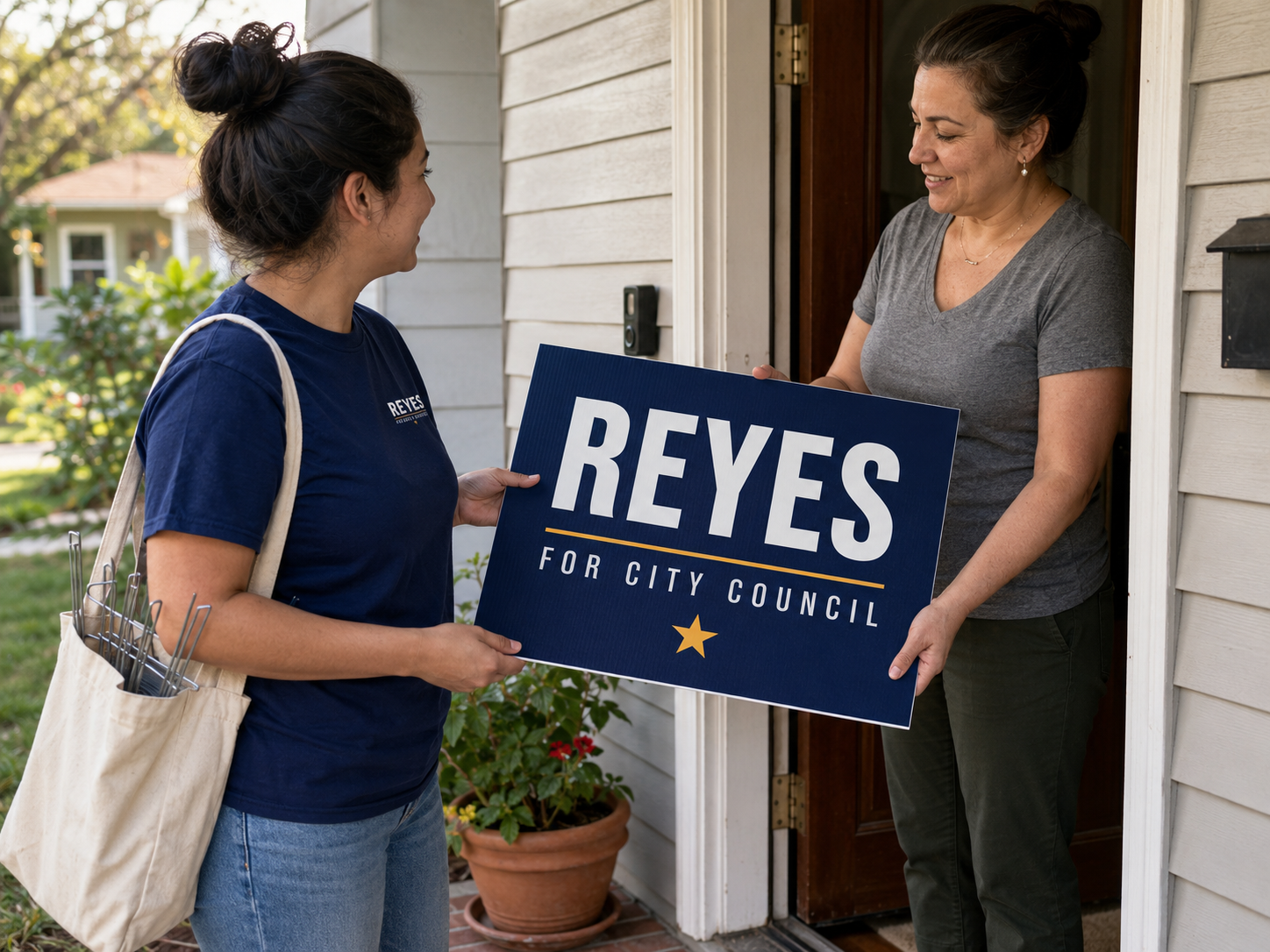
The ask itself should be short. "I'm running for [office] and I'd love to put a yard sign in your yard. Your street gets a lot of traffic and I think it would really help." That's the whole ask. If they say yes, confirm a time to drop off the sign. If they hesitate, address the hesitation directly rather than pressuring. A reluctant yes is usually not a yes.
Make It Easy to Say Yes
Friction kills conversion. If a supporter has to figure out how to receive the sign, where to place it, or how to stake it, some percentage of them will delay until the moment passes. The easiest ask comes with a drop-off offer. You bring the sign to them, you stake it, and you do the work. All they have to do is agree.
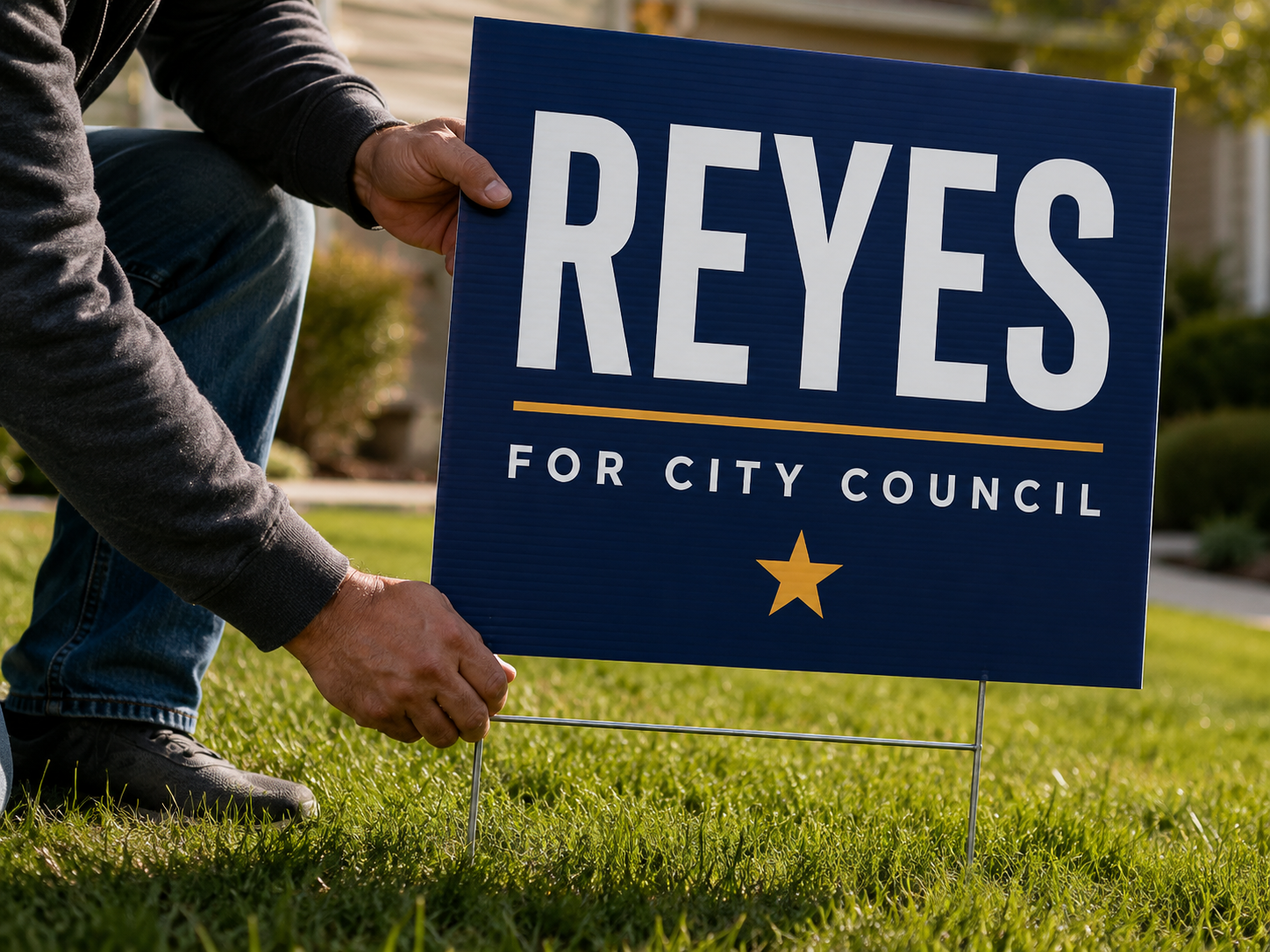
For supporters who are traveling, have back problems, or live in areas with hard soil, handle the installation yourself on a scheduled visit. For supporters who are comfortable doing it themselves, include a brief note in the sign kit on where to place it for the best visibility. Anything that removes a decision or task from the supporter increases the chances that the sign goes up and stays up.
What to Do When They Say No
A no is not the end of the conversation. Most hesitation falls into a few predictable categories: HOA restrictions, a spouse who disagrees, concern about neighbor reactions, or uncertainty about the race. Each of these has a response that doesn't pressure the supporter while leaving the door open.
-
For HOA restrictions, offer a window sign instead. A sign placed in a front-facing window typically falls outside HOA jurisdiction because it's inside the home.
-
For spousal disagreement, back off gracefully and ask if they'd be willing to help in another way, like attending an event or sharing a post online.
-
For concern about neighbor reactions, this is actually a good sign that they care about their neighborhood standing, which means they're the kind of person whose endorsement carries weight. Let them know you understand and move on without pressure.
What to Include in a Campaign Yard Sign Kit
A yard sign kit is everything a supporter needs to get a sign up correctly, without having to contact you for help. Campaigns that deliver kits get faster placement, fewer calls, and better-looking installations than campaigns that just hand over a sign.
The Core Kit
The minimum kit is a sign, two wire stakes, and a brief placement note. The note should cover three things:
-
Where to place the sign for the best street visibility
-
How deep to drive the stakes
-
Who to call if something happens to the sign
Keep the note to half a page. A one-page instruction document for a yard sign is more than most people will read.
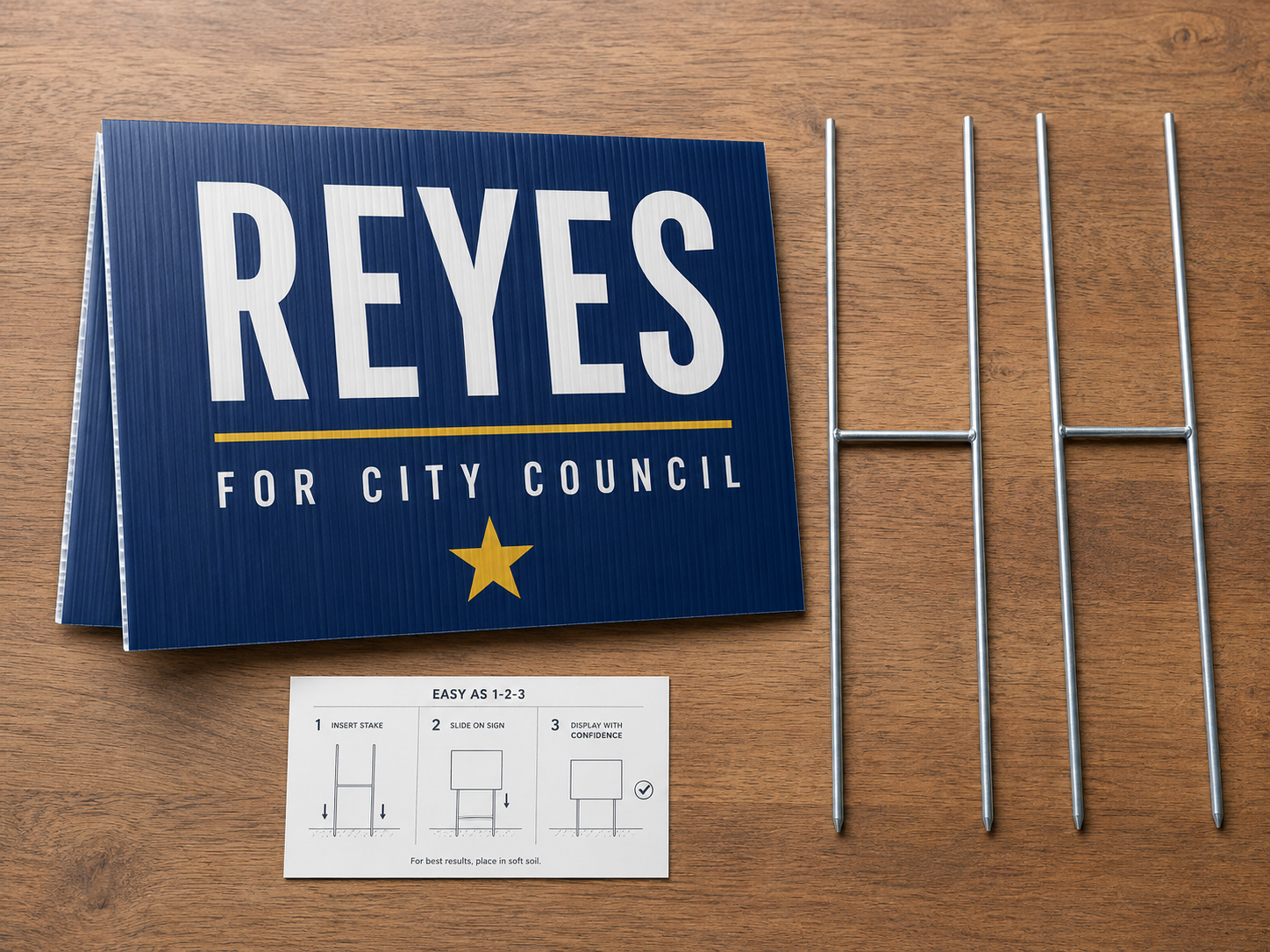
For supporters in areas with hard soil, include a rubber mallet or offer to bring one when you drop off the sign. Hard soil is one of the most common reasons signs go up crooked or fall over in the first week. Supplying the tool removes the barrier. For guidance on proper staking depth and technique, the guide to securing yard signs in the ground covers installation in detail.
Extras That Drive More Signage
Including two or three extra signs in a kit for high-enthusiasm supporters consistently produces more placements than asking those supporters separately for additional locations. People who are already excited about helping will often place the extra signs themselves if they have them. The marginal cost of including two extra signs in a kit is small compared to the cost of a separate conversation, a separate delivery, and the time lost between the two.
Some campaigns include a small door hanger or business card in the kit asking the supporter to share the sign on social media. A photo of a yard sign posted by the homeowner reaches their neighborhood social network and produces a secondary round of visibility that the physical sign alone doesn't.
Building a Distribution Network That Compounds
A campaign that relies on the candidate personally delivering every sign hits a ceiling fast. The candidate has limited time, and personal delivery doesn't scale past the first few dozen signs. The campaigns that place hundreds of residential signs build a distribution network where volunteers handle most of the logistics.
Precinct Captains and Block Leads
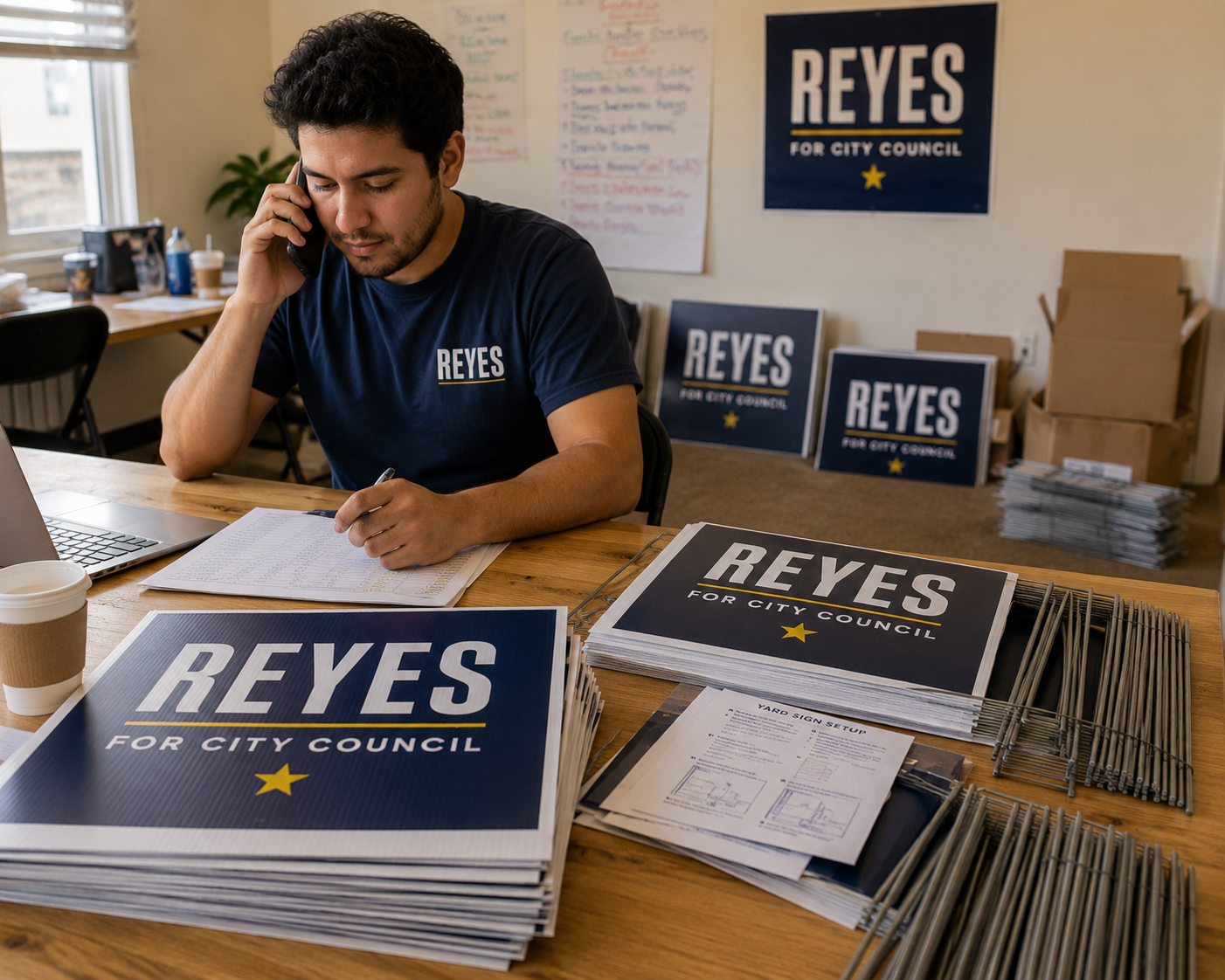
The most effective structure for sign distribution is a precinct or block-level volunteer who takes responsibility for a specific geographic area. This person receives a batch of signs, a list of committed hosts in their area, and the authority to handle delivery and installation on their own schedule. They report back to the campaign on placements, and they flag any locations where signs were refused or removed.
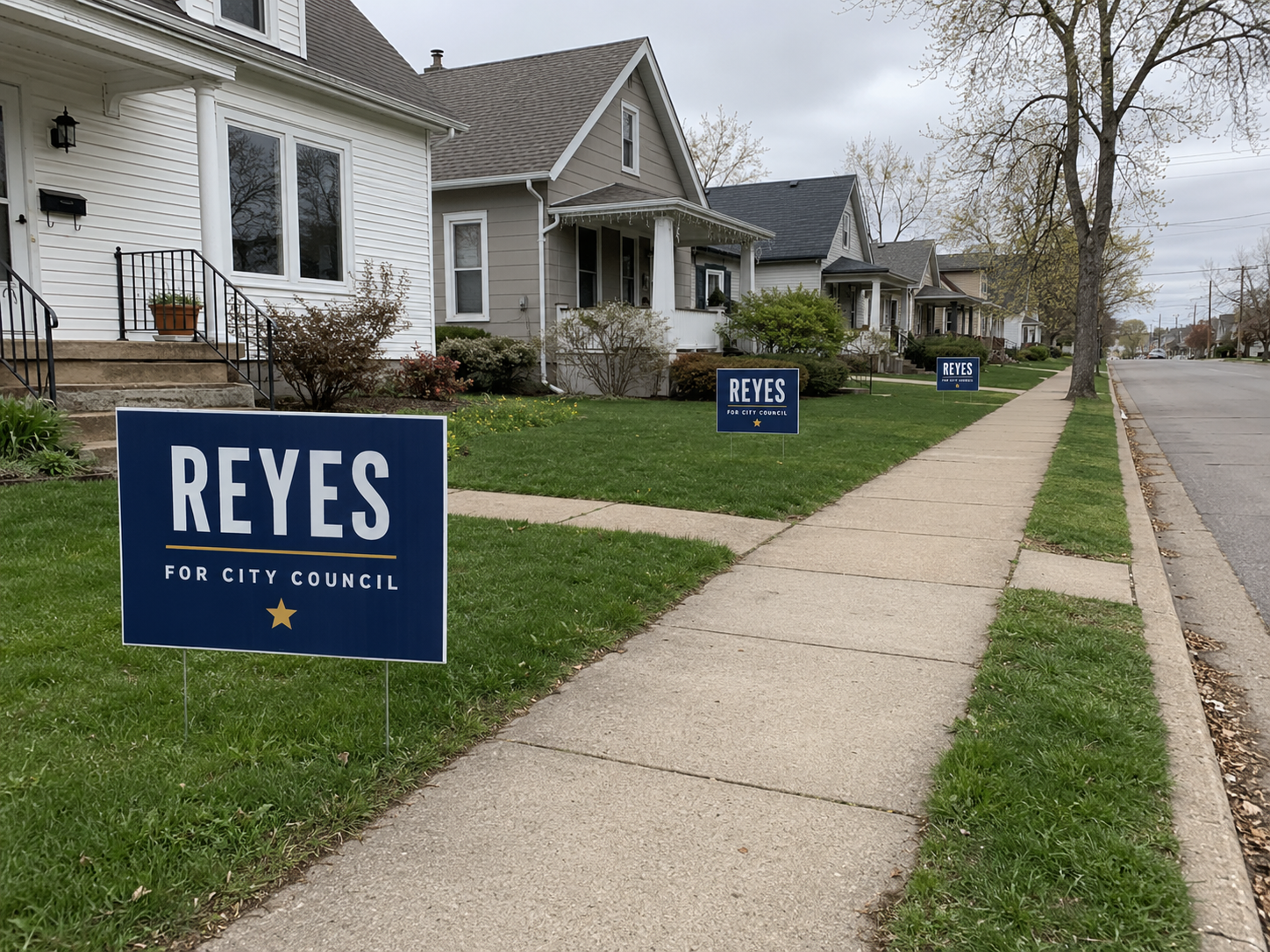
Precinct captains work well because they already have a relationship with the people they're asking. A neighbor-to-neighbor ask converts better than a campaign staffer asking a stranger. The ask comes with built-in trust.
The Sign Request Form
A public-facing sign request form, whether on your campaign website or a simple shared form, lets motivated supporters opt in without requiring a personal ask. People who fill out a sign request form are self-selecting as high-commitment hosts. They've already decided they want a sign. The campaign just needs to fulfill the request promptly.
Response time matters here. A supporter who fills out a sign request form and waits two weeks to hear back loses some of the initial enthusiasm. Building a process where sign requests are fulfilled within 48 to 72 hours, even if that means batching deliveries by neighborhood, keeps the momentum.
When Signs Go Missing
Sign theft and damage are a normal part of any campaign. The response matters more than the theft itself. Campaigns that replace stolen or damaged signs within 48 hours signal to the host that their support is valued and send a message to anyone watching that the campaign is organized. Campaigns that take a week to replace a missing sign lose some of the hosts' enthusiasm for future asks.
Order more signs than your initial placement target. A reserve of 20 to 30 percent above your planned placements covers theft, weather damage, and the signs that supporters request after watching their neighbors put one up. Running out of signs in the final weeks of a campaign, when placement demand is highest, is an avoidable problem.
You can't prevent every loss, but a few smart placement and staking choices make yard signs harder to steal and cut down how many you have to replace.
Our bulk yard sign pricing guide covers volume tiers and per-sign costs. For timing, our overnight production and next business day shipping means replacement signs can be back in supporters' yards within a few days of the original going missing.
|
Supporter Objection |
What It Usually Means |
Recommended Response |
|
"My HOA doesn't allow it" |
Genuine restriction or uncertainty |
Offer a window sign instead. HOAs govern outdoor placement, not interior window displays. |
|
"My spouse doesn't want one" |
Household disagreement |
Back off gracefully. Ask if there's another way they can help. |
|
"I don't want to upset my neighbors" |
High neighborhood social investment |
Acknowledge it and move on. Don't pressure someone with strong community ties. |
|
"I'm not sure about the race yet" |
Still evaluating |
Give them something to read. Follow up in a week. Don't ask again at this visit. |
|
"I rent, I'm not sure I can" |
Uncertain about permission |
Most leases allow yard signs. Offer to provide a note they can share with their landlord. |
Quick Answers to Common Questions About Supporter Yard Signs
How do I find supporters who want yard signs?
Start with your donor list, volunteer list, and anyone who has attended a campaign event. These people have already demonstrated commitment. Follow up with a direct ask. A sign request form on your campaign website also captures motivated supporters who self-select without requiring a personal ask.
Should I ask every supporter or only specific ones?
Prioritize supporters with high-visibility properties and strong commitment first. A targeted ask with a specific reason converts better than a mass ask. After placing signs with priority hosts, use a sign request form to capture the broader pool.
What if a supporter's sign keeps getting taken?
Document the location and replace the sign promptly. For locations that lose signs repeatedly, driving stakes deeper, using two stakes in an X pattern, and placing the sign further from the road reduce opportunistic removal. The guide to making yard signs harder to steal covers specific deterrence tactics.
Can supporters put signs in HOA neighborhoods?
Many HOAs restrict the number of signs, the size, and the placement window around elections. A window sign placed inside the home typically bypasses HOA outdoor restrictions. Encourage supporters to check their CC&Rs before putting a sign in the yard.
What size signs work best for residential yards?
18 by 24 inches is the standard residential yard sign size. It's large enough to read from a car at normal speed and small enough to fit in a standard front yard without dominating the space. The political yard sign size guide covers size options by race type and placement context.
When should I start placing supporter signs?
The final six to eight weeks before Election Day is the window where sign saturation matters most. Placing too early risks theft and weather damage before the critical period. For primary-specific timing and 2026 deadline details, the 2026 midterm sign deadlines and rules guide has the full timeline.
How do I thank supporters who host signs?
A personal thank-you, whether a quick call, a handwritten note, or a follow-up text, goes a long way. Supporters who feel recognized are more likely to renew their sign hosting in the next election cycle and more likely to recruit their neighbors to host signs on your behalf.
Order your custom political yard signs with no minimum, no setup fees, and a free proof in about an hour. Ships the next business day. When you're ready to order at volume, the bulk order program has pricing tiers for campaigns ordering 50 signs or more.





Leave a Comment