
The 2026 Political Sign Playbook: Strategy, Volume, and What to Do When Signs Get Stolen
Yard signs build name recognition. That is their job, and the research backs it up. A Yale-led study of four randomized field experiments found that signs raise a candidate's vote share by an average of 1.7 percentage points. Small in a presidential race, but decisive in a school board, city council, or county commissioner race where margins are tight and most voters have never heard the candidates' names.
This guide covers the strategic decisions every campaign has to make about signs: how many to order, when to put them up, where to place them, how to get supporters to host them, and what to do when they get stolen. Sign design and sizing each have their own guides, which we'll reference along the way.
How Many Yard Signs Does Your Campaign Need?
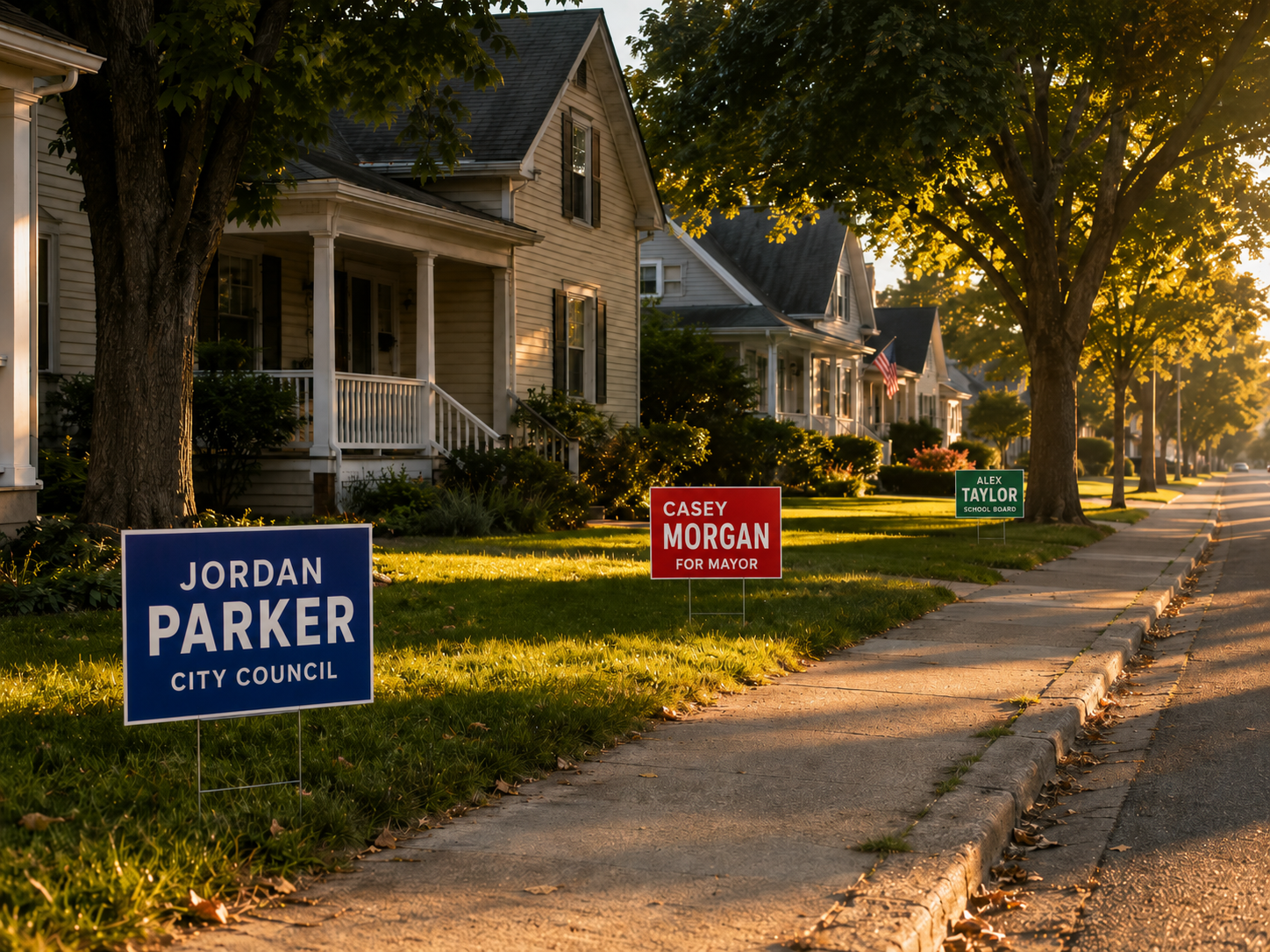
Order one yard sign for every 30 registered voters in your district as a baseline. That is the back-of-envelope number most campaign operatives use and it gets you close on the first try.
The Formula for a Tighter Number
For a sharper calculation:
- Multiply registered voters × expected turnout × your target vote share percentage.
- Divide the result by 6 if your district is geographically compact and you have plenty of yards to place signs in.
- Divide by 10 if your district is sprawling or rural.
| Example: a city council district with 12,000 registered voters, 40% turnout, and a 52% vote goal works out to 2,496 votes needed. Divide by 6, and you need 416 signs. Divide by 10 and you need 250. Most local races land between those numbers. |
How Volume Shifts by Race Type
The baseline number adjusts based on a few factors:
-
Incumbents need fewer signs. Existing name recognition does the work signs are designed to do.
-
First-time candidates need more. No name recognition means signs are carrying the whole load.
-
High-turnout races need more. More voters paying attention means more eyes to reach.
-
Down-ballot races need more relative to district size. School board, judicial, and trustee races have the lowest information environments and the highest sign payoff.
Yard Sign Plus has no minimums on any order, so smaller races can order exactly what the formula says without padding the quantity to hit a printer's threshold. If you under-order and need more mid-cycle, you can reorder at any quantity at the same per-unit pricing.
Our bulk order program page and the bulk yard sign pricing guide cover per-unit pricing at every quantity tier.
When to Put Up Your Campaign Signs
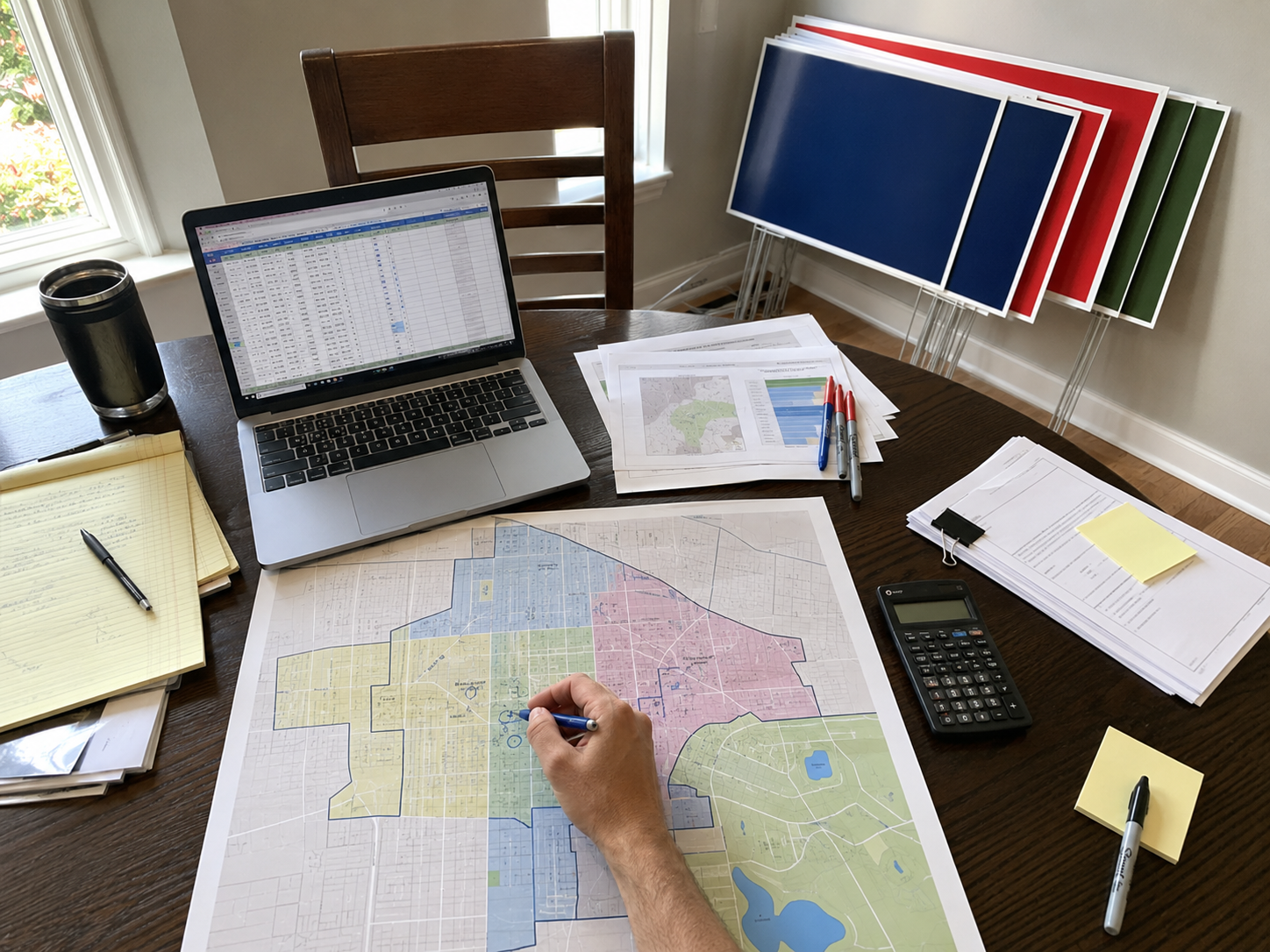
Put your signs up four to eight weeks before election day. Earlier than that and voters develop sign blindness — they stop registering the message after seeing it for months. Later than that and you have not given the recognition cycle enough time to work.
Timing Windows by Race Information Level
The window shifts based on how much voters already know about the race:
-
Low-information races (school board, judicial, special district): signs can go up four weeks out and still build recognition in time. Voters in these races often decide in the booth.
-
High-information races (mayoral, state legislative): signs benefit from the full eight weeks. More media coverage means the sign is reinforcing other messaging rather than introducing the name cold.
-
Primary elections: follow the same rule but compress the timeline. If your primary is six weeks from the general, put signs up earlier in the primary cycle and leave them up through both.
When to Place Your Order
Order signs about 45 to 60 days before they need to be in the ground. That timeline assumes most printers take a day or two to send a proof, another day for revisions, and several business days for production and shipping.
Yard Sign Plus compresses most of that window. Proofs go out in about an hour. Production runs overnight. Signs ship the next business day after proof approval. Most of the 45 to 60 day lead time becomes your own — building the placement list, lining up sign crews, and coordinating supporter outreach — instead of waiting on the printer.
For the full breakdown on production and shipping windows, see our guide on custom yard sign turnaround times and the shipping information page.
Where to Place Yard Signs So They Actually Work
Place signs on supporter property along residential streets that carry car traffic. That is the highest-value placement and the only one that reliably builds recognition.
Placement Rules First-Time Campaigns Get Wrong
-
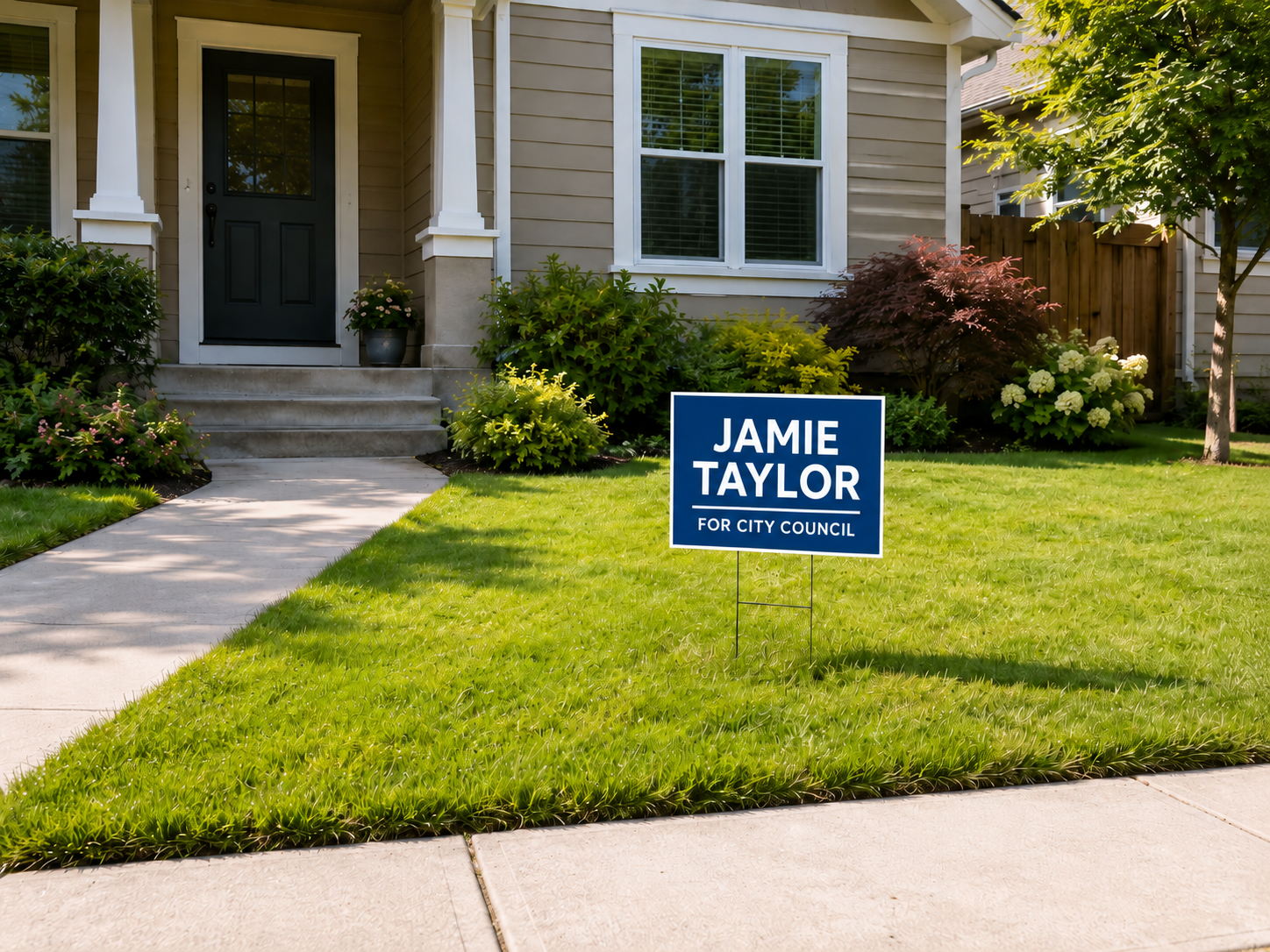
Plant signs closer to the house than the curb. Signs near the curb sit in the public right-of-way in many jurisdictions and can be legally removed by the city. Signs closer to the house are on private property and protected.
-
Avoid the public right-of-way entirely. Most cities define the right-of-way as the area between the sidewalk and the street, plus utility easements. Signs there are routinely pulled by code enforcement.
-
Get permission for every commercial placement. A sign on a business lawn looks like an endorsement. If the business owner did not consent, you have created a problem for your campaign and theirs.
-
Use stakes that actually anchor the sign. Wire H-stakes are standard and come with every Yard Sign Plus order at no extra charge, but in soft, rocky, or frozen ground they pull out easily.
Our guide on how to secure yard signs in the ground covers the techniques that hold up through weather and tampering.
Polling Place and Intersection Rules
-
Polling places require special attention. Most states allow campaign signs near polling places but only outside a defined buffer zone, typically 100 to 150 feet from the entrance. Check your state's rules before election day.
-
Intersections beat straight roads. Cars slow down at intersections, which gives the eye time to register a name. A sign at a four-way stop reaches more attentive viewers than one on a 45-mph straightaway.
For the general framework on what is and isn't allowed by jurisdiction, our yard sign placement laws and regulations guide covers the baseline rules.
How to Get Supporters to Host Yard Signs
Ask in person, capture commitments at every campaign event, and use canvassing to find new yards. Passive sign distribution does not work.
The Highest-Yield Recruitment Tactics
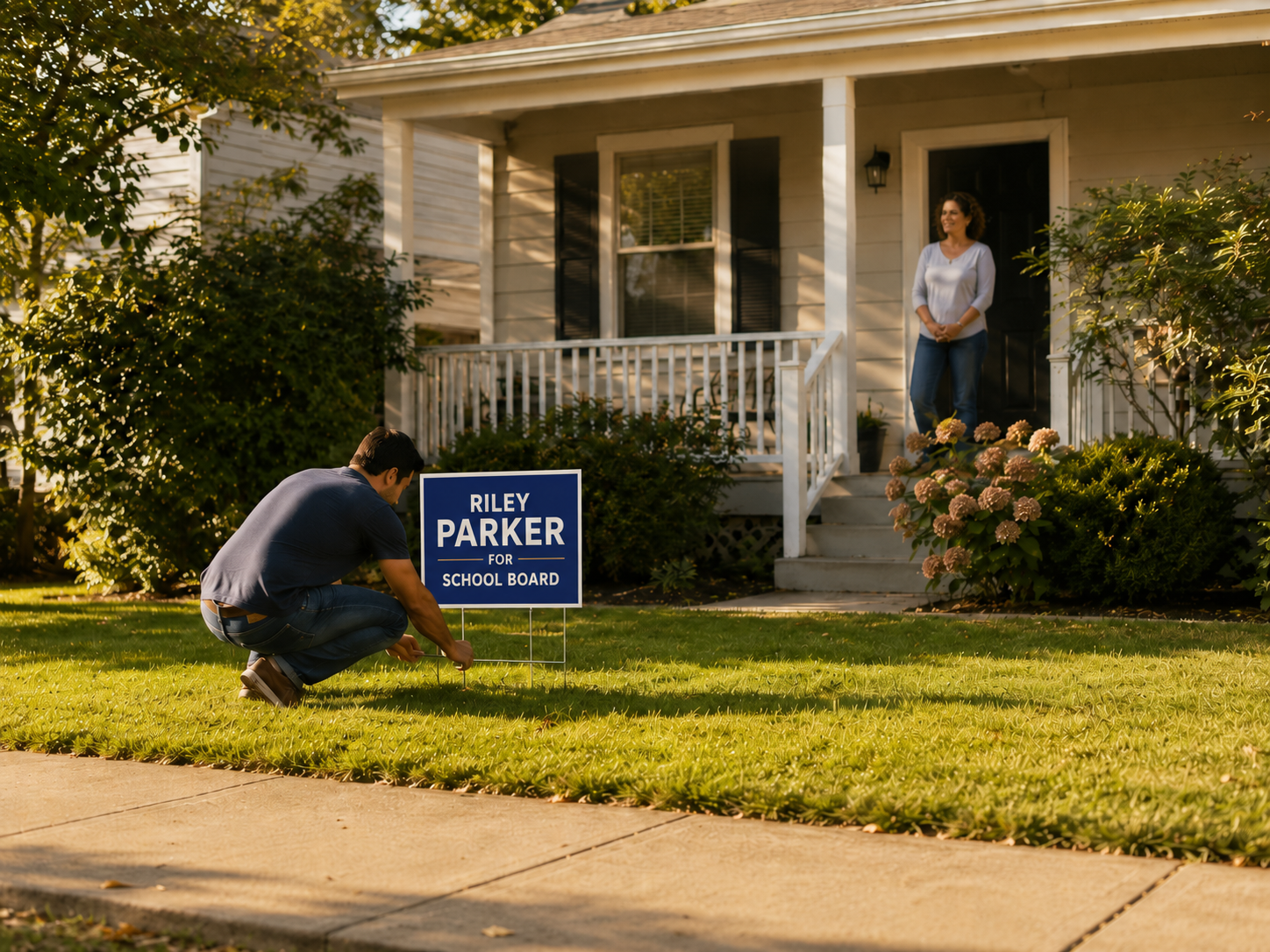
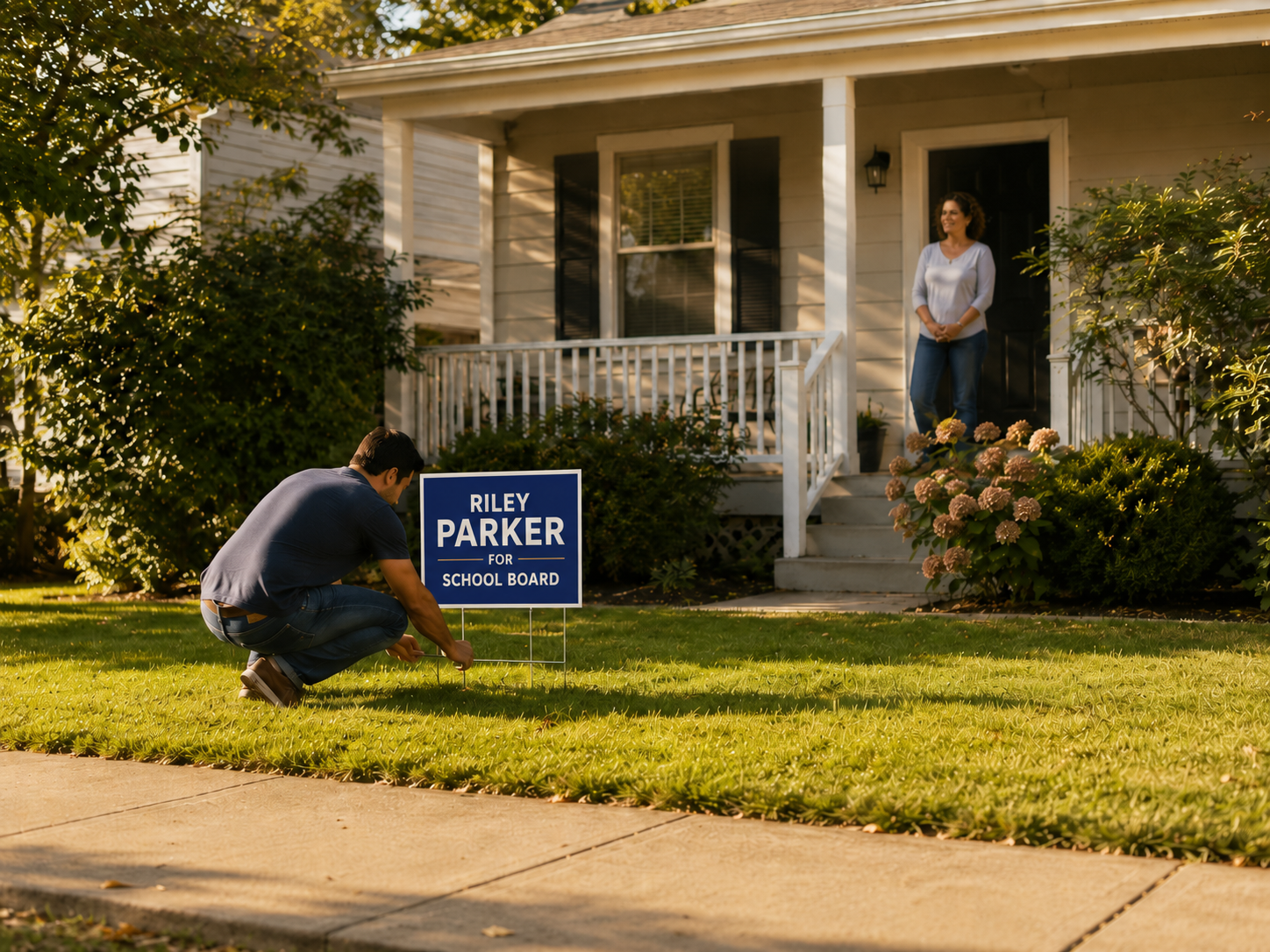
The single highest-yield tactic is a sign-up sheet at every fundraiser, house party, and meet-and-greet. People who show up to a campaign event are already supporters. A clipboard that asks for their address and a checkbox for "yes, I'll host a yard sign" converts at higher rates than any other recruitment tactic.
Canvassing teams should ask about signs at every door where the voter is identified as supportive. Carry signs in the car. If the homeowner says yes, place the sign immediately. Coming back later often leads to lost placements due to second thoughts.
Some campaigns run different sign variations for different supporter segments — a "Teachers for [Candidate]" version for a school board race, a "Neighbors of Westside" version for a city council ward, or a parade banner that matches the main yard sign. Yard Sign Plus prints fully custom signs with no template restrictions, and free design help comes with every order, so a campaign with a single base design can run variations across neighborhoods without paying separate setup fees or hiring a designer.
Three Counterintuitive Rules
-
Do not give homeowners extra signs to hand out to neighbors. It feels generous but it ends with signs in garages instead of yards. If a supporter wants more signs in the neighborhood, take the neighbor's address and have your sign crew install it directly.
-
Train sign crews to knock on the door before planting. This catches last-minute changes of mind and turns the placement into a brief positive interaction with the homeowner.
-
Track every sign location in a spreadsheet. Address, supporter name, install date, sign size. The list lets you replace stolen signs quickly, pull signs after the election as required by law, and reach the same supporters in future cycles.
What to Do When Your Signs Get Stolen
Replace stolen signs fast and decide whether to lean into the theft as a campaign narrative. Both responses matter.
The Practical Replacement Workflow
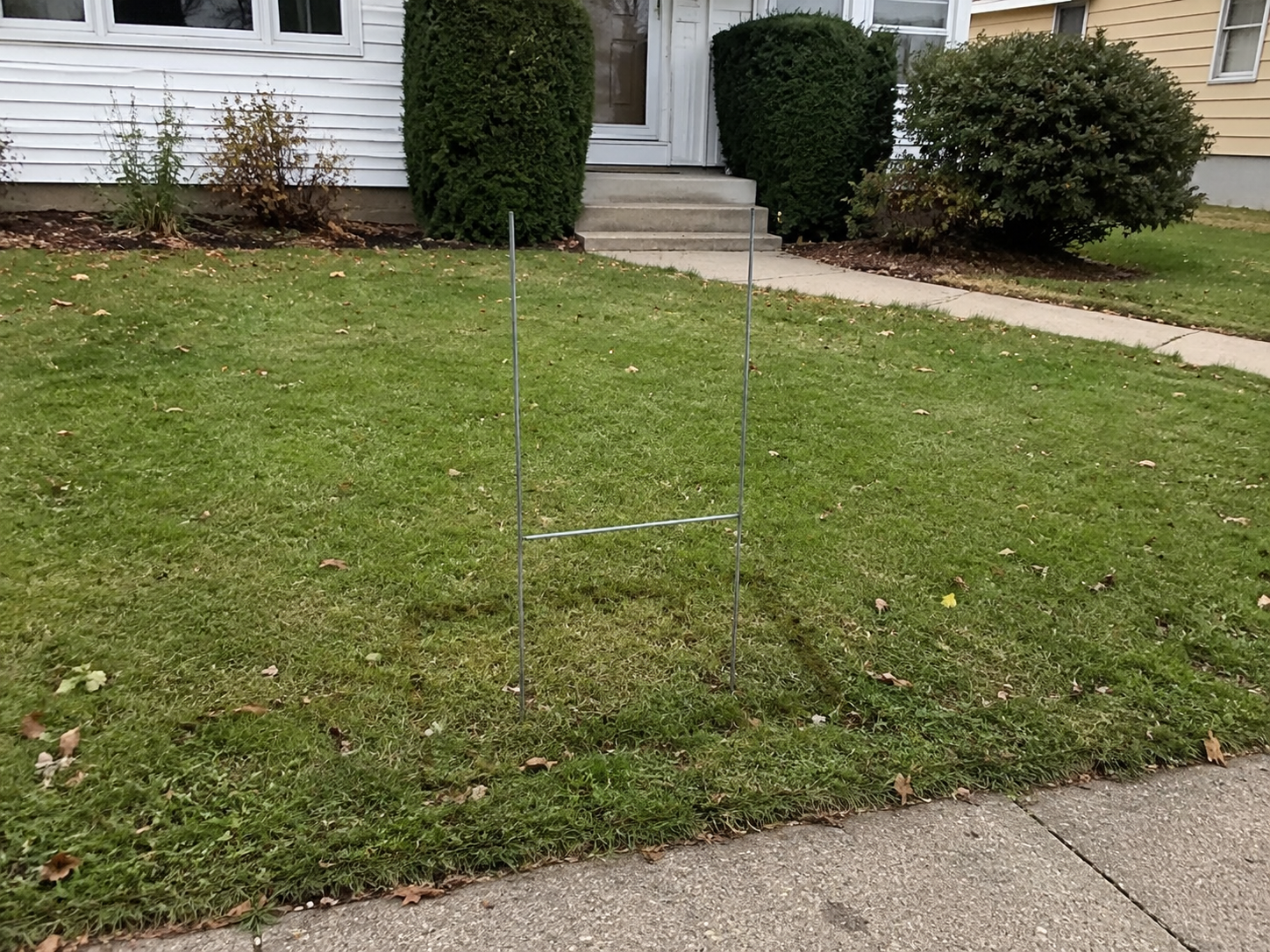
Sign theft happens in nearly every competitive race. It is illegal in most jurisdictions but enforcement is rare. Police will take a report and rarely investigate further. The practical response is to keep replacement signs in reserve and to have a sign crew ready to redeploy within 48 hours of a theft report.
This is exactly the situation Yard Sign Plus is built for. Reorders skip the design approval step entirely because your file is already on record. Production runs overnight. Signs ship the next business day, with overnight shipping available at checkout if you need them in 48 hours.
There are no setup fees on reorders, no minimums, and no premium charge for rushing the job. Most campaigns build a 10-15% replacement buffer into their initial order, then reorder mid-cycle if theft outpaces the buffer.
When Theft Becomes a Campaign Narrative
Some campaigns turn theft into a fundraising and rallying moment. A social media post showing the empty stake holes, framed as voter intimidation or as evidence that the opposition is worried, can generate sympathy and new supporters. Use judgment here. Some theft may simply be random vandalism, and treating it as a conspiracy can make a campaign look paranoid.
For prevention tactics, place signs closer to the house, use heavier stakes inserted deeper, and cluster signs in groups rather than isolating one per yard.
Why Non-Partisan Races Lean Hardest on Signs
If you are running for a non-partisan race like school board, water district, or judicial seat, lean even harder on signs. Voters in these races have the least information and rely most heavily on name recognition to make decisions in the booth.
The design framework matters too. Name on top, office on bottom, no clutter in the middle. If you do not have a designer or are not confident in your layout, free design help is included with every Yard Sign Plus order — a real designer builds your sign at no extra cost.
Our campaign sign ideas and design strategies guide covers the layout principles, and the political yard sign size guide covers which sign size to order for which placement.
Quick Answers to Common Political Sign Questions
Should I order single-sided or double-sided signs?
Double-sided for road-perpendicular placement where traffic moves in both directions. Single-sided for fence, wall, or window placements where only one side is visible. Most campaigns order a mix, which Yard Sign Plus prices at the same per-unit rate as single-sided runs of the same size.
What should I actually put on a political sign?
Name, office, optional short slogan, optional website or QR code. Nothing else. Our campaign sign ideas and design strategies guide covers the full framework.
What size sign should I order?
18x24 inches is standard for residential yards. 24x36 inches works for high-traffic intersections and highway-facing properties. The political yard sign size guide covers the full range.
What are political yard signs made of?
4mm corrugated plastic, also called coroplast, printed with UV-resistant inks. Yard Sign Plus prints every order on the same coroplast and UV ink combination regardless of rush level, so an overnight order is just as weather-resistant and durable as a standard one. For more on materials, our blog on what yard signs are made of covers the full breakdown.
Can I reuse signs from a previous campaign cycle?
Yes, if the sign is still in good shape and your messaging has not changed. Most coroplast signs last 12 to 18 months outdoors, so signs from the previous primary or general election can usually be redeployed if stored properly between cycles.
What do I do with leftover signs after the election?
Most states require removal within 7 to 10 days of the election. Pull them yourself or assign a sign crew to do it. Coroplast is recyclable at facilities that accept polypropylene plastics. For reusable signs, our guide on how to store yard signs covers what to do between cycles.
Custom political yard signs printed in Houston with free proofs in about an hour, no minimums, no setup fees, and overnight production when you need replacements fast. Start your free proof on our political yard signs category page.



Leave a Comment