
How Bulk Yard Sign Pricing Works and How to Get the Most for Your Budget
 Yard Sign Plus Team
|
Yard Sign Plus Team
|
If you have ever priced out yard signs for a campaign, a job site, or a real estate push, you have probably noticed that the cost per sign looks very different at 10 signs versus 100. Most sign companies will tell you that prices drop as quantity goes up. Very few explain why that happens or how to use that information to actually plan your budget.
This post covers how bulk yard sign pricing works from the ground up, what factors control what you pay, and how to figure out the right quantity for your situation without overspending or coming up short.
Why the Cost Per Yard Sign Drops When You Order More
The short answer is that printing has fixed costs that do not scale with quantity. Understanding that basic mechanic makes bulk pricing much easier to work with.
Fixed Production Costs and Why They Matter
Every print job, regardless of size, goes through the same set of steps. File preparation, press setup, production workflow, and quality review all happen whether you are printing 5 yard signs or 500. Those steps take roughly the same amount of time and labor either way.
When you order a small quantity, those fixed costs are spread across fewer units, so each sign carries a larger share of the total production expense. When you order more, the same fixed costs are spread across a larger run. The cost per sign drops because the math works out that way, not because larger customers get a special deal.
This is why you will see a noticeable price difference between ordering 10 signs and ordering 50, and a more gradual difference as you move from 50 to 100 to 250. The biggest per-unit savings almost always happen in the early quantity jumps.
How Quantity Breaks Lower Your Cost Per Unit
To make this concrete, here is how the per-unit pattern typically plays out for a standard 18"x24" corrugated plastic yard sign:
|
Quantity |
Cost Per Unit |
Best For |
|
10+ yard signs |
$5.38 |
First-time orders, testing a design |
|
20+ yard signs |
$3.29 |
Small events, single job sites |
|
50+ yard signs |
$2.69 |
Local campaigns, active contractors |
|
100+ yard signs |
$2.52 |
Campaigns, real estate teams, growing businesses |
|
250+ yard signs |
$2.18 |
Large campaigns, ongoing sign needs |
The exact pricing at each tier depends on size, print options, and hardware choices, all of which are covered below. Yard Sign Plus displays pricing in real time as you build your order, so you can see the per-unit cost update as you adjust quantity before committing to anything.
Six Things That Affect What You Pay for Yard Signs
Quantity is the biggest driver of your total cost, but it is not the only one. These six factors together determine what your order actually costs.
Quantity
Covered above. Order more and your cost per sign goes down. The early jumps in quantity produce the biggest per-unit savings.
Yard Sign Size
Larger signs require more material and more ink. The standard size for most yard sign applications is 18"x24", which is what political campaigns, real estate agents, and most small businesses use. If you need larger signs for high-traffic road frontage or commercial job sites, expect a higher per-unit cost at any given quantity.
Yard Sign Plus offers 10 standard yard sign sizes along with custom dimensions for buyers who need something specific.
Single-Sided vs. Double-Sided Printing
Double-sided signs cost more to produce than single-sided ones. For signs displayed on H-stakes along a road or in a yard where traffic passes from both directions, double-sided printing is worth the extra cost. People approaching from either direction can read the message. For signs attached to fences, walls, or posts where only one face is visible, single-sided is the practical choice and keeps costs down.
Hardware
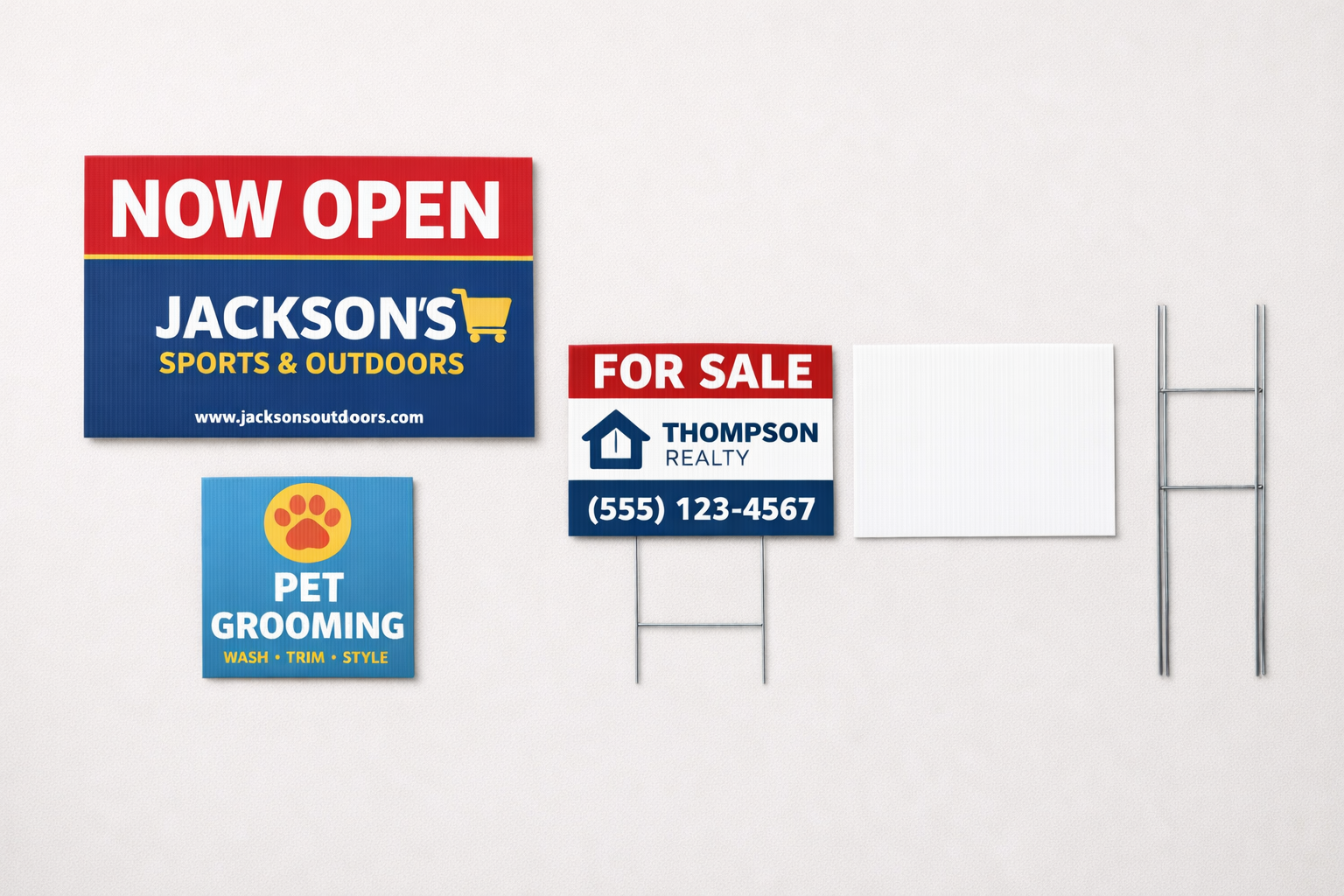
Wire H-stakes are the standard hardware for ground display and add a modest cost to the order. They slide into the corrugated flutes on the sign and push into the ground, which makes setup quick on any job site or campaign route. Frames and other mounting options are also available depending on how the signs will be displayed.
Shipping
Shipping is where bulk orders can get more expensive than buyers expect, especially when ordering from a printer on the other side of the country. At Yard Sign Plus, free shipping is available on qualifying orders. For buyers in Texas and surrounding states, the Houston-based production facility also means shorter transit times and lower shipping costs on standard delivery.
If your order timeline is flexible, standard ground shipping keeps costs down. If you need signs by a specific date, factor in both production time and shipping time when choosing your shipping method.
Custom Designs and Setup Fees
Many buyers assume that design fees, artwork setup charges, or proof fees are standard costs on top of the sign price. At some printers they are. At Yard Sign Plus they are not.
There are no setup fees. There are no design fees. Free design help is available if you need it, and a proof is sent within about one hour of placing your order at no charge. The price shown during checkout is the price you pay. Nothing is added at the end.
This matters for bulk orders especially. On a 100-sign order, a $25 setup fee that gets charged per design is $25 on top of an order where you thought you knew the total. Transparent pricing from the start makes budgeting straightforward.
A Real-World Cost Breakdown for Bulk Sign Orders
Understanding the pricing structure is useful on its own, but it becomes more useful when you apply it to a real situation. Here are three examples of how different buyers typically think through their quantity and budget.
A political campaign covering a city council district.
A candidate needs signs spread across three neighborhoods covering the main commuter routes and key supporter addresses. At 10 signs, coverage is thin. At 50, the major roads get covered with a few left for supporter yards. At 100, the candidate has enough to replace signs that get damaged or stolen without placing a new order mid-campaign. Most local campaigns land in the 50 to 150 range for this kind of district coverage, and the per-unit savings at those quantities make the investment worthwhile relative to the visibility gained.
A contractor running active job sites.
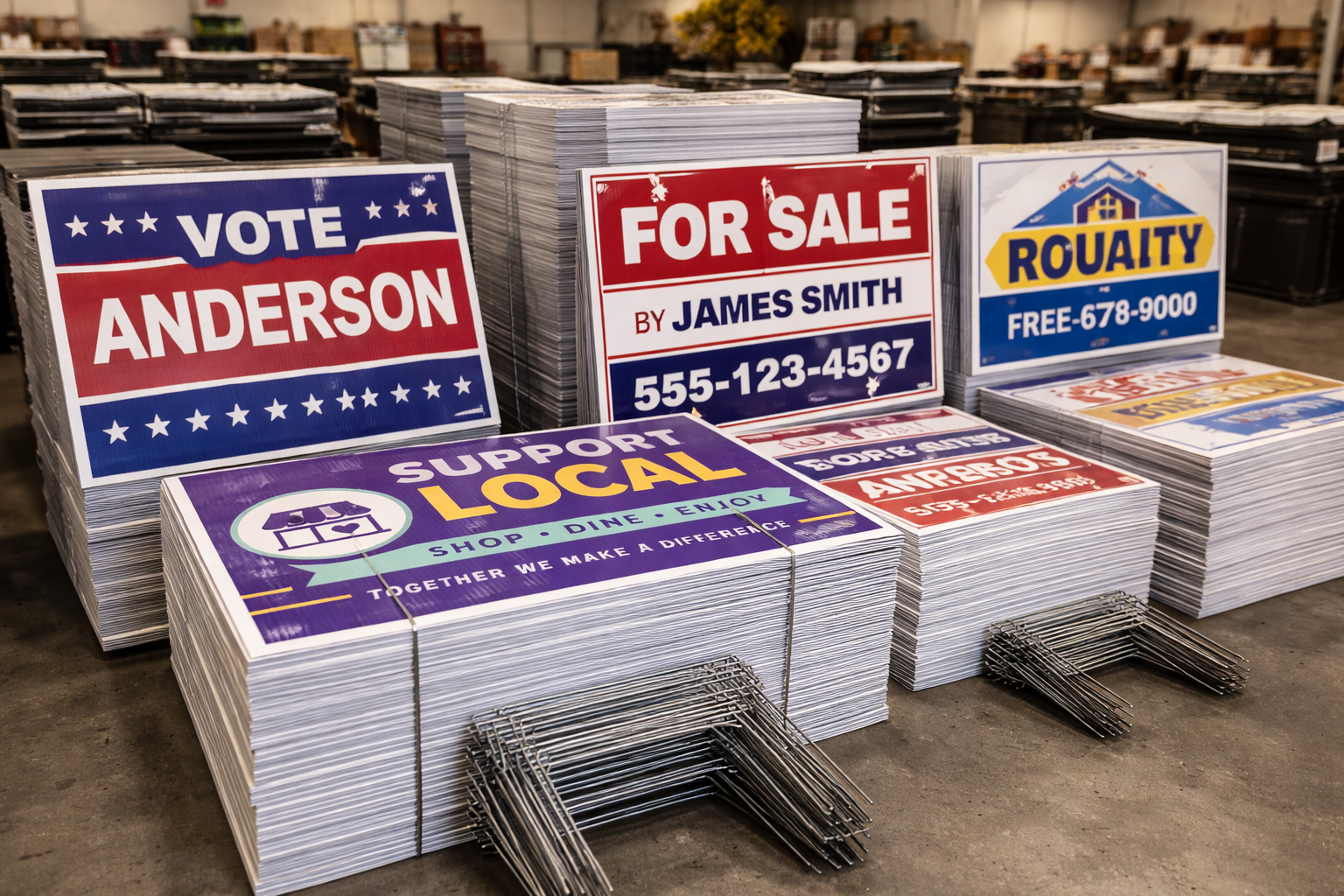
A roofing company has four active projects going at the same time. Each site gets two or three signs for brand visibility in the neighborhood. At 10 to 15 signs, that covers current sites with a few left over for new jobs that start during the same period. Reordering every two weeks is inefficient. Ordering 50 signs at once gives the same per-site coverage at a lower per-unit cost and a buffer for new work coming in.
A real estate agent stocking seasonal inventory.
An agent with five active listings needs directional signs, for-sale yard signs, and open house signage. Ordering individually every time a new listing comes on is slow and expensive per sign. A quarterly bulk order of 25 to 50 signs at the right sizes keeps the agent stocked without tying up a large budget all at once.
In all three cases, the decision is not just about saving money per sign. It is about ordering the right quantity to cover realistic needs without coming up short or ordering far more than you will use.
Who Gets the Most Value From Bulk Yard Sign Orders
Bulk pricing works for a wide range of buyers. The use case shapes how many signs make sense and what the right configuration looks like.
Political Campaigns and Canvassing Efforts
Volume is central to how yard sign campaigns work. A single sign in one yard is a gesture. Signs at consistent intervals along the main routes into a district create the impression of broad community support, which is part of the strategy.
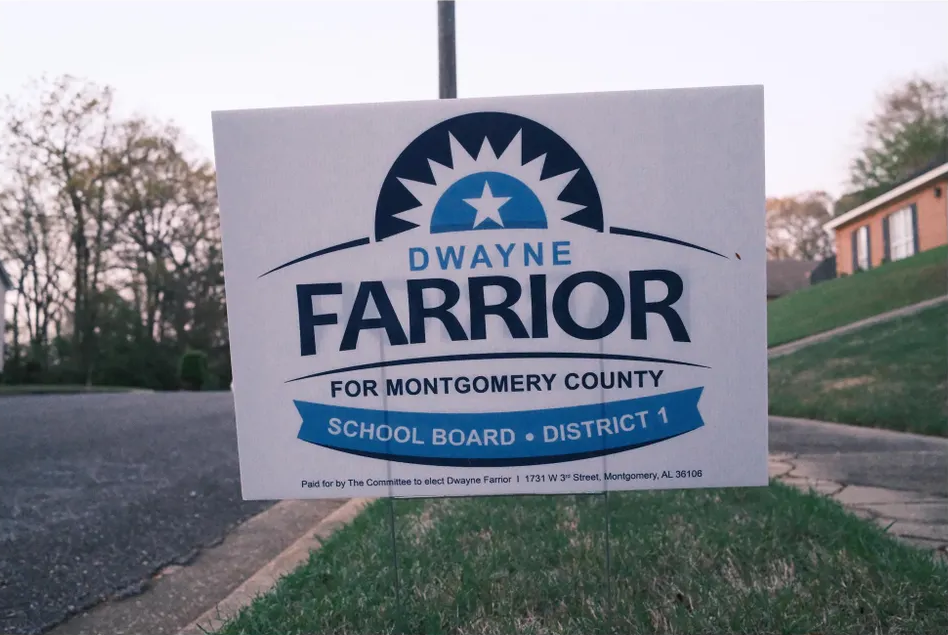
Corrugated plastic with UV-resistant inks holds up through a full campaign season outdoors. Campaigns that order early and in quantity get the lowest per-unit cost and have time to plan placement before the final push. Campaigns that order at the last minute pay more per sign and risk missing the production window for their event or election date.
For campaigns watching a budget carefully, the no-minimum policy at Yard Sign Plus also means you can place a smaller initial order to test placement strategy and add more as the campaign picks up without being locked into a large minimum.
Small Businesses and Contractors
Job-site signage for contractors serves two purposes. It marks the active work location for customers and subcontractors, and it puts the company name in front of the neighborhood during a project that the neighbors can see happening. A roofing job, a landscaping overhaul, or a home addition puts a contractor's sign in front of dozens of potential customers every day for the length of the project.
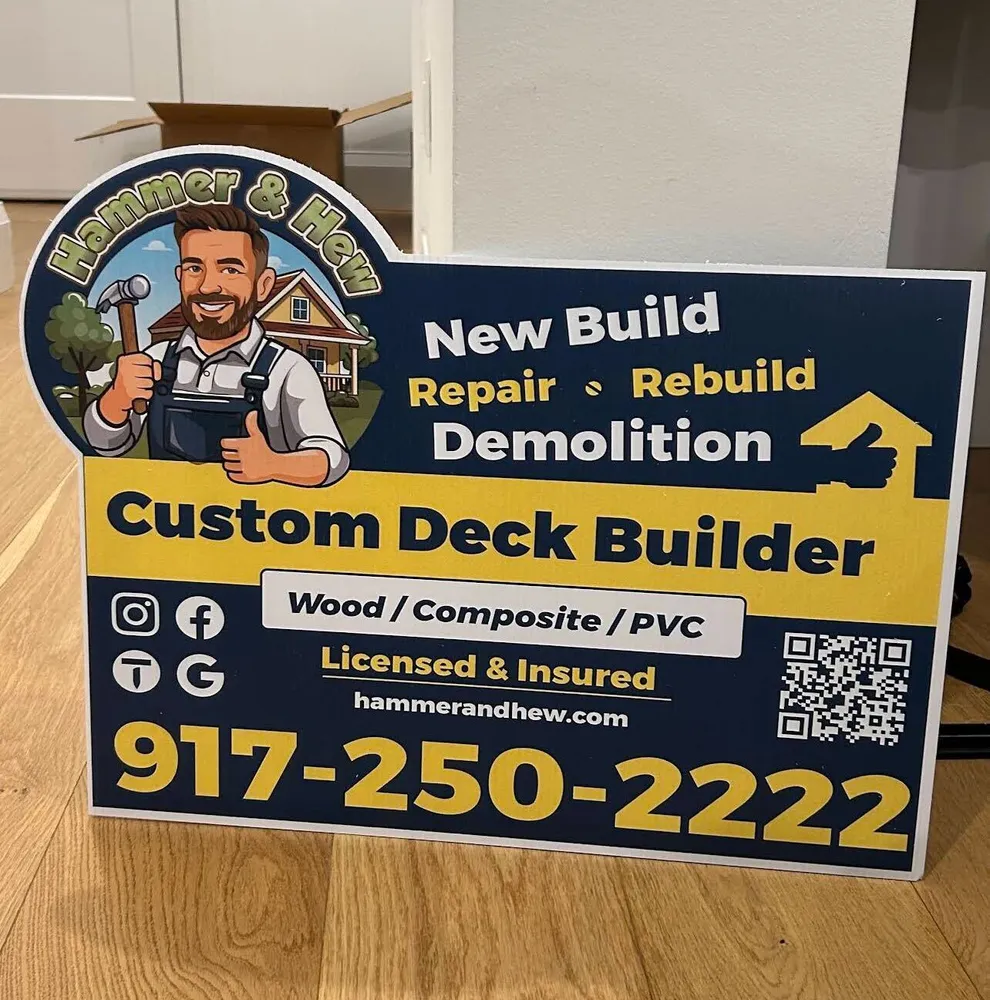
Small businesses running local promotions or grand openings benefit from bulk pricing because the campaign usually needs signs across multiple intersections and locations to be effective. A single sign on one corner works for one direction of traffic. Coverage across four or five high-visibility spots reaches a much bigger daily audience.
Real Estate Teams and Agents
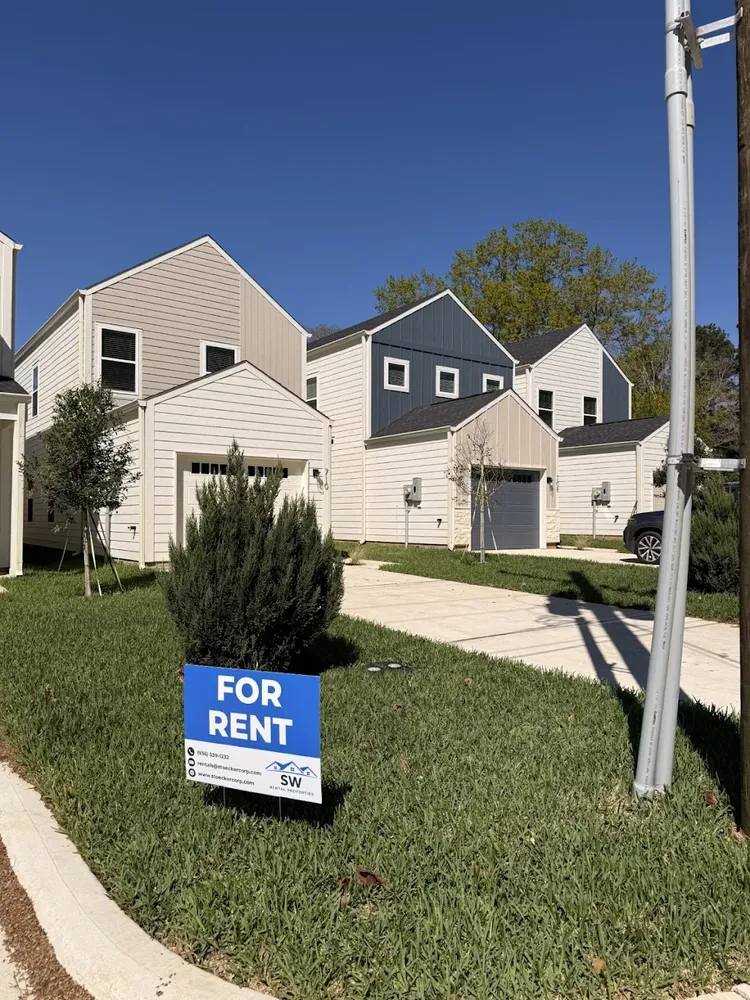
Agents typically need signage in cycles tied to listing activity. For-sale signs, open house directionals, and just-listed announcements all have short, useful lives tied to specific properties. Buying yard signs in bulk at the start of a busy season rather than ordering sign by sign saves money per unit and removes the friction of placing a new order every time a listing comes on. Teams with multiple agents working the same market can pool orders to hit higher quantity tiers and bring the per-unit cost down further.
Nonprofits, Community Organizations, and Schools
Budget is almost always the constraint for this group. Bulk pricing helps because the per-unit cost at even modest quantities like 25 or 50 signs is meaningfully lower than ordering a handful at a time. Events, fundraisers, awareness campaigns, and community drives all need signage that can be spread across a neighborhood or a campus without a large spend.
The no-minimum policy matters here too. A school booster club ordering 15 signs for a fundraiser does not need to hit a 50-sign minimum to place an order. They pay the transparent per-unit price for their quantity and get the same quality of corrugated plastic and UV printing as a larger order.
No Minimums and What That Actually Means for Your Budget
As a bulk yard sign printer with no minimum order requirement, Yard Sign Plus lets you order 1 yard sign or one thousand. The tiers are set up that way, and buyers who need smaller quantities often feel like they are paying full price while missing out on the savings.
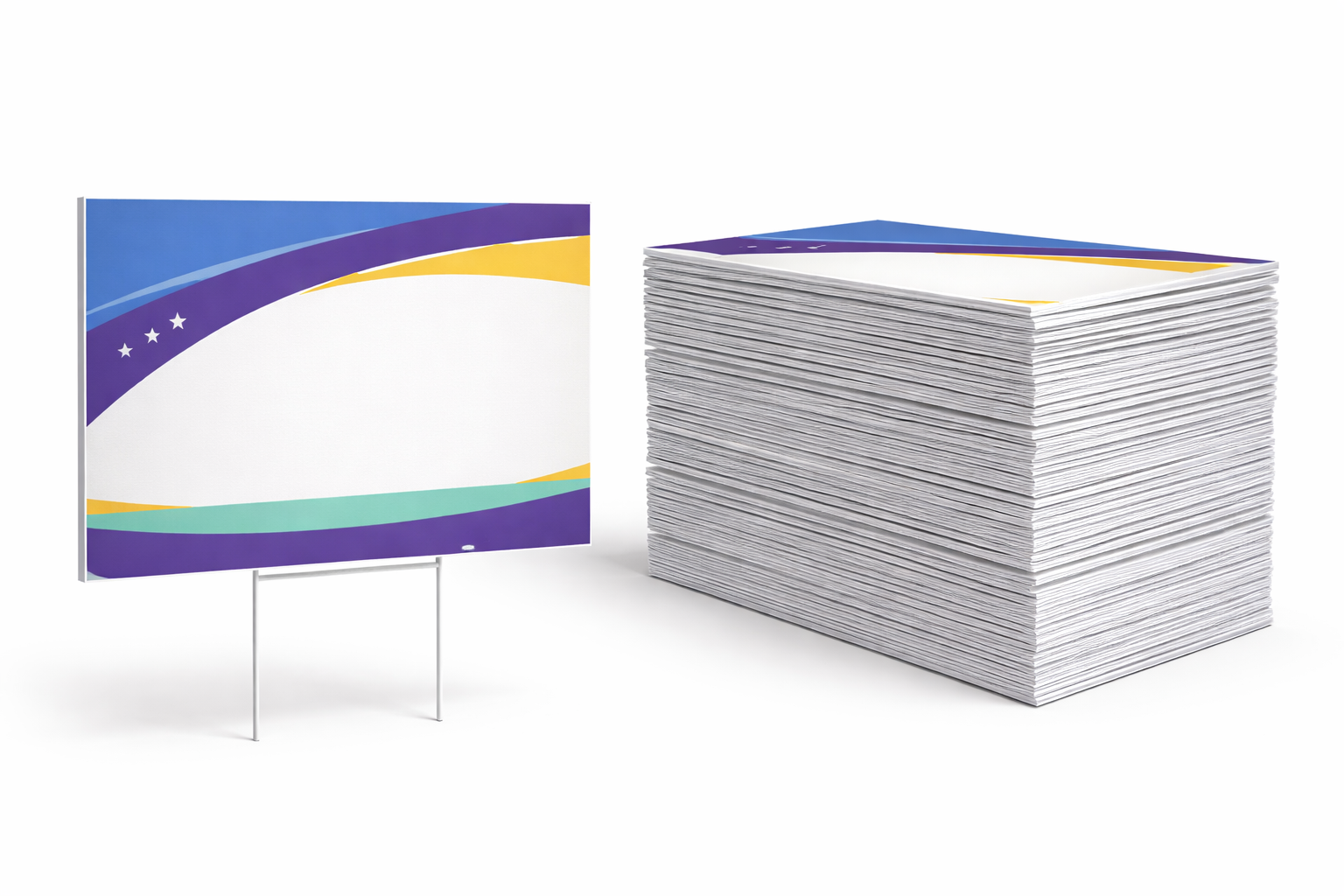
Yard Sign Plus has no minimum order requirement. You can order one sign or one thousand. The pricing scales transparently at every quantity level, so a buyer ordering 10 signs sees the accurate per-unit cost for that quantity, not a penalty rate for not hitting a minimum.
For buyers who are ordering for the first time or testing a design before committing to a larger run, this removes a real barrier. Place a small order, see the quality in person, confirm the design works in the field, then order custom yard signs at scale with confidence.
Every order, regardless of size, comes with the same 4mm corrugated plastic, UV-resistant ink printing, and free proof within about one hour. There is no minimum required to get full-quality production.
How to Get the Most Out of Your Yard Sign Budget
A few practical notes that come up often with bulk orders.
Start from coverage, not a round number.
Figure out how many locations you need to cover, add a buffer of 10 to 15 percent for signs that get damaged, go missing, or are needed for last-minute locations, and order to that number. Ordering 100 yard signs because it sounds like a round number for a campaign that needs 40 signs leaves you with 60 signs in storage.
Factor in both production and shipping time.
If you need yard signs in the ground by a specific date, count back from that date and include both production time and transit time in your calculation. Ordering with five to seven business days to spare removes most of the deadline risk without needing to pay for rush production.
Use the free design help.
Getting the design right on the first proof avoids reprints. Yard Sign Plus offers free design help and sends proofs within about one hour. Revisions are part of the process, but a clear brief upfront reduces the back-and-forth and keeps your order moving.
Check the shipping threshold for free shipping.
On qualifying orders, shipping is free. If your order is close to that threshold, adding a few extra signs may cost less than paying for shipping and gives you useful buffer stock for your campaign or project.
Get an instant quote on bulk yard signs and see your per-unit cost update in real time as you adjust quantity.



Leave a Comment